European auto policy is living through a striking contradiction in late 2026. On showroom floors and registration charts, battery-electric demand is accelerating again—surging past two million annual EV registrations earlier than in previous years. Inside committee rooms in Brussels, however, lawmakers are actively pulling back from the strict 100 percent zero-emission cliff that was supposed to end new internal combustion car sales in 2035.
In mid-November, the European Parliament’s Environment Committee voted to revise the 2035 target from a full 100 percent tailpipe cut down to an 87.5 percent CO2 reduction—effectively scaling to 95 percent when automakers apply low-carbon steel credits—ahead of a crucial full Parliament vote in December. As Transport + Energy reported on November 19, the compromise reflects months of intense lobbying from automotive powerhouses like Germany and France looking to preserve breathing room for plug-in hybrids, range-extenders, and synthetic-fuel drivetrains.
Why Europe’s Registrations Are Surging Even as Rules Soften
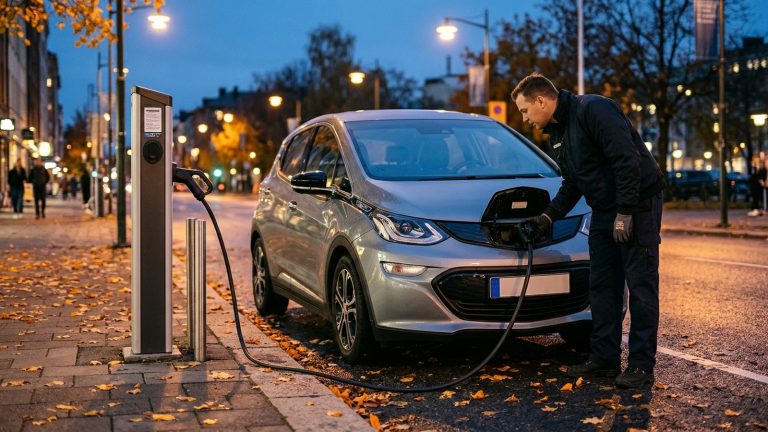
If policymakers sound cautious, buyers across Europe have been far less hesitant this autumn. Tracked European markets logged a 61 percent year-on-year jump in new electric registrations in October 2026 alone, pushing pure battery-electric vehicles (BEVs) above 32 percent of monthly market share and carrying cumulative regional EV sales past the two-million mark weeks ahead of 2025’s pace.
That divergence highlights why Brussels’ debate is no longer about whether drivers will adopt electric cars, but about industrial competitiveness. European legacy manufacturers face dual pressure: tightening Chinese competition on battery costs and uneven charging density between northern and southern member states. Giving factories a 12.5-point regulatory cushion—especially paired with domestic low-carbon steel incentives—is designed to keep European suppliers from shedding jobs while local battery gigafactories scale up.
The Global Picture: 23 Million EVs in 2026 and Counting
Zoom out beyond Europe, and the long-term trajectory looks even steeper. Industry tracking reported via GlobeNewswire’s November 20 powertrain forecast places global electric car sales on track for roughly 23 million units across full-year 2026—representing 28 to 29 percent of every new passenger car sold worldwide.
Meanwhile, in its World Energy Outlook 2026 released in mid-November, the International Energy Agency (IEA) projected that electric cars will capture 55 percent of global new-car sales by 2035, according to EV Infrastructure News. Crucially, the IEA points to two catalysts driving that forecast beyond subsidies: a quadrupling trajectory in public charging capacity and recent global energy-supply shocks that have made oil-displacement economics far more attractive for importing nations.
| Market / Benchmark | Late-2026 Snapshot | Key Policy or Demand Driver |
|---|---|---|
| Global EV Sales (2026) | ~23 million units (28%–29% share) | Cost parity in LFP packs and emerging-market growth |
| IEA 2035 Global Projection | 55% of global new car sales | Quadrupling public charging + energy security focus |
| Europe (Oct 2026 / YTD) | +61% YoY Oct jump; >2M YTD sales | 32%+ monthly BEV share; renewed fleet & retail uptake |
| EU 2035 Mandate Proposal | 87.5% CO2 cut (95% w/ steel credits) | Committee compromise facing December Parliament vote |
Asia’s Contrast: India’s Festive Boom vs. China’s Retail Shakeout
The global 23-million milestone masks sharp regional contrasts across Asia. In India, where traditional internal-combustion passenger car sales slipped 7 percent during the festive buying season, electric vehicle sales surged 52 percent as buyers gravitated toward lower per-kilometer running costs and broader local model choices. China, which still accounts for the majority of global EV volume, hit a record 73.2 percent New Energy Vehicle (NEV) retail penetration rate in November even as overall showroom traffic softened—triggering ferocious year-end discounting and forcing weaker domestic brands toward consolidation.
What December’s Vote Means for Buyers and Automakers
If the full European Parliament ratifies the 87.5 percent compromise next month, consumers shouldn’t expect a sudden resurrection of pure gas-guzzlers. Under a 95 percent effective reduction ceiling, nearly every high-volume vehicle sold in Europe after 2035 would still need a plug—either full battery-electric or a deeply electrified plug-in hybrid capable of covering most daily commuting on grid power. Instead, the real winners are high-efficiency plug-in hybrids, range-extender crossovers or commercial vans, and European steelmakers positioned to monetize low-carbon production credits across continental supply chains.
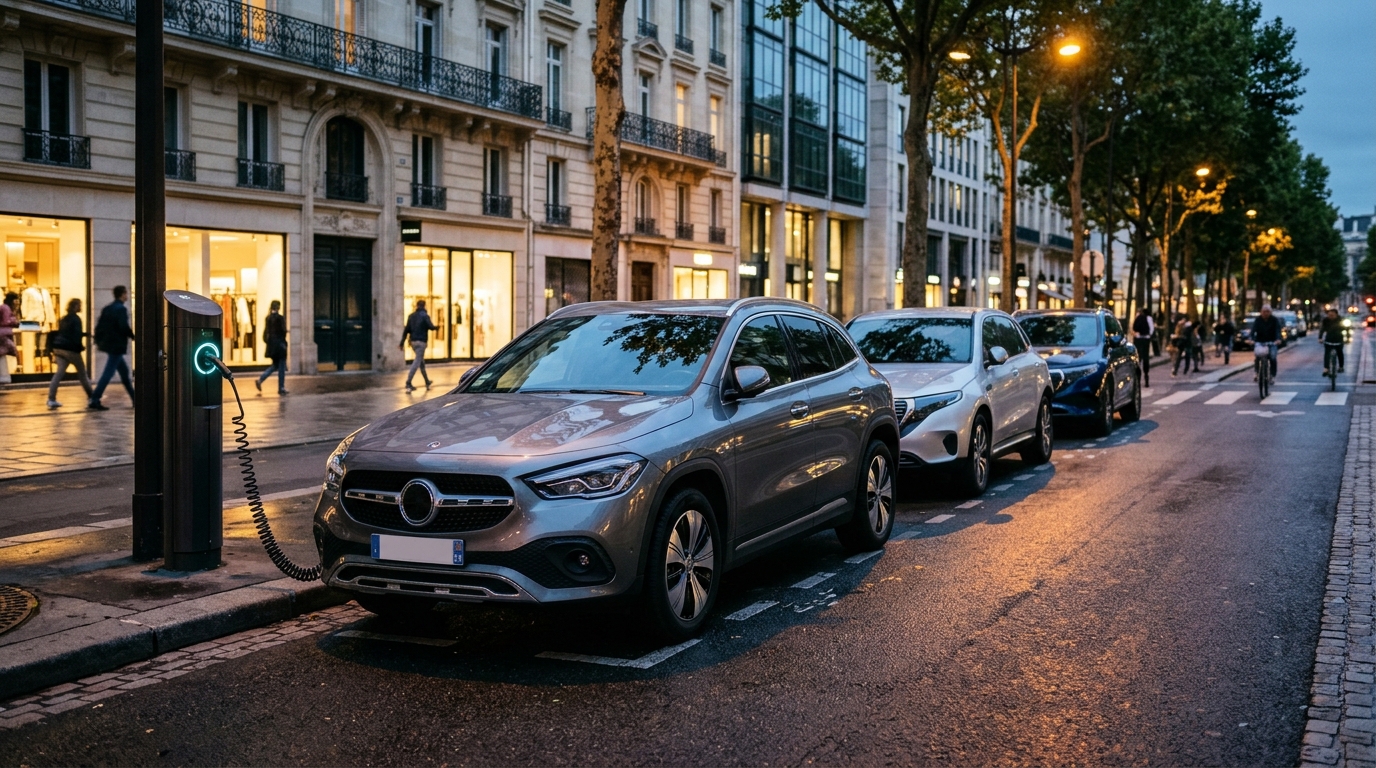
For ordinary car shoppers weighing a purchase heading into 2027, the practical implication is actually reassuring. Lower-cost lithium-iron-phosphate (LFP) packs, denser urban streetlamp charging, and broader used-fleet supply mean electric running costs are already beating gasoline on total ownership math in high-fuel-tax markets without needing absolute bans to force the switch. Automakers that treat a softer 2035 ceiling as an excuse to delay software and battery R&D risk waking up to find buyers have already moved on without them.
The broader takeaway is clear: the electric transition is no longer moving on a single regulatory timetable. Even when politicians soften a distant deadline by a few percentage points, falling battery prices, expanding public chargers, and surging uptake from Delhi to Berlin are already locking in an overwhelmingly electric automotive market well before 2035 arrives.