If airport concourses look just as crowded as last November, your eyes aren’t playing tricks on you—yet beneath the surface, American holiday travel just hit an inflection point. According to the AAA Thanksgiving holiday travel forecast covering Tuesday, November 24 through Monday, November 30, 2026, roughly 81.5 million Americans will journey 50 miles or more from home. That represents a razor-thin 0.1 percent decline—about 121,000 fewer travelers than in 2025—officially snapping a three-year post-pandemic run of consecutive Thanksgiving travel records.
Why did the record streak pause while consumer appetite for holiday gatherings remains near historic highs? Follow the fuel bill. As detailed in economic briefings via CEO Economy, spot jet fuel averaged roughly $4.64 per gallon in October, pushing average domestic round-trip Thanksgiving airfares up roughly 17 percent year-over-year to around $800 per ticket. Combined with stubbornly elevated pump prices across late summer and autumn, travel overhead finally forced marginal households to trim itineraries or switch modes.
Drivers Dominate, While Trains, Buses, and Cruises Quietly Surge
As usual, the overwhelming share of Thanksgiving movement stays on the interstate. AAA estimates 72.9 million Americans will travel by car—down slightly by roughly 200,000 compared to 2025—while domestic leisure air travel accounts for approximately 5.96 million passengers. Yet the fastest-growing corner of the holiday forecast sits outside both highways and jetways: buses, passenger trains, and cruise departures are projected to climb 4.1 percent year-over-year to reach 2.6 million travelers.
That 4.1 percent uptick makes intuitive sense when you compare family math on a Wednesday morning departure. For a household of four flying from Chicago to Boston or Atlanta to Washington, $800 round-trip tickets turn a four-day weekend into a $3,200 airfare outlay before anyone books a hotel or pays for baggage. Regional rail corridors, intercity coach lines, and short-hop holiday cruises suddenly look less like backup options and more like budget sanctuaries.
| Travel Mode / Metric | Thanksgiving 2026 Projection | Change vs. 2025 | Primary Driver |
|---|---|---|---|
| Total Travelers (50+ miles) | 81.5 million (AAA) | -0.1% (-121,000) | High airfare & fuel overhead ends 3-yr record streak |
| Automobile Road Trips | 72.9 million | -200,000 | Elevated late-summer/fall gasoline prices |
| Domestic Air (AAA Leisure) | 5.96 million (~$800 avg ticket) | +17% avg fare jump | $4.64/gal October spot jet fuel & tight jet supply |
| Rail, Bus & Cruise | 2.6 million | +4.1% | Families seeking affordable alternatives to $800 flights |
Why Airlines and TSA Still Expect Packed Terminals
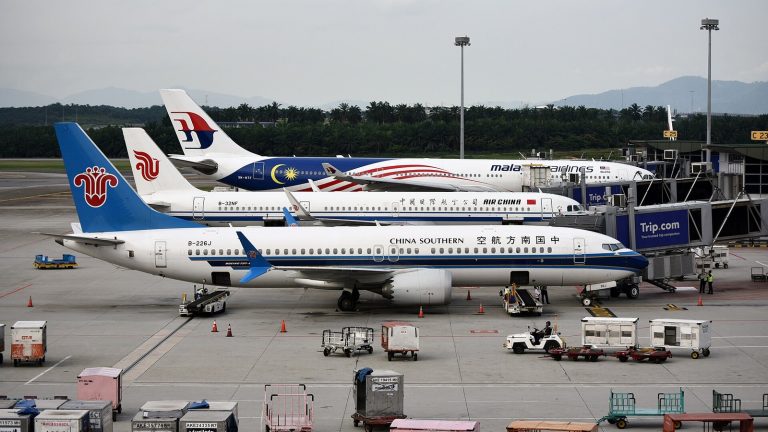
Here is where holiday headlines often confuse casual readers: how can AAA project a slight 0.1 percent dip in overall travelers while airline trade groups brace for near-record airport throughput? Airlines for America (A4A), representing major U.S. carriers over a broader 11-day Thanksgiving window from November 20 through November 30, expects nearly 29 million passengers and added roughly 38,000 extra daily seats compared to 2025 to absorb demand.
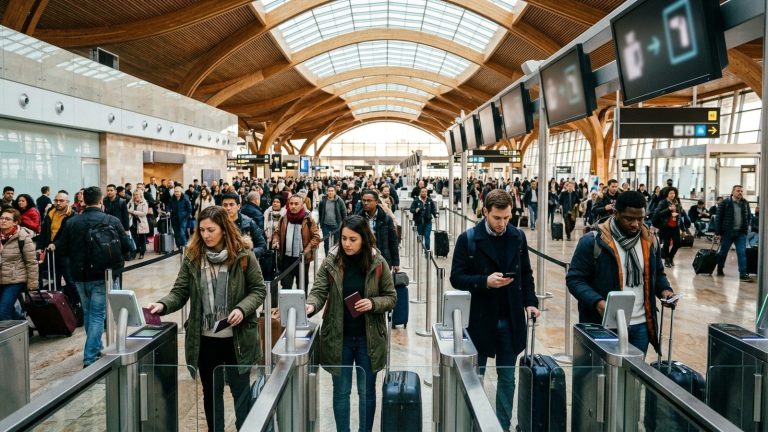
The discrepancy comes down to methodology. AAA tracks domestic leisure person-trips of 50 miles or more as round-trip journeys. TSA checkpoint screenings, by contrast, count every individual pass through airport security—capturing international arrivals, business flyers squeezing in client meetings before Wednesday afternoon, and multi-leg itineraries. In practice, that means major hubs like O’Hare, Atlanta, Dallas/Fort Worth, and Denver will still feel packed to capacity even if overall leisure growth flattened by a tenth of a percent.
Shorter Booking Windows and the ‘Non-Negotiable’ Trip
Stepping back from one U.S. holiday week, the broader travel pattern in late 2026 reflects selective resilience rather than retreat. Surveys such as the American Express Global Travel Trends report consistently find that Millennials and Gen Z still treat travel as a protected line item in household budgets—even when dining out or retail spending gets trimmed. What has changed is how people book: shorter booking windows, sharper focus on refundable fare classes, and deliberate substitution toward off-peak Tuesday or Saturday travel days where seat inventory isn’t priced at $800.
Experienced travelers are also adapting to tighter capacity economics across airline networks. With commercial jet delivery delays still constraining narrowbody fleet expansion and spot fuel stubbornly high, carriers have largely retired the ultra-cheap basic-economy Thanksgiving dumps that used to surface in early November. Instead, dynamic pricing algorithms hold peak Wednesday and Sunday return fares elevated until the final days before departure, rewarding travelers who either book six weeks out or stay flexible enough to fly on Thanksgiving morning itself.
At the same time, experiential trips—from family cruises to “set-jetting” visits inspired by favorite films and series—keep pulling leisure dollars away from purely routine family drives. Even families sticking within driving range are spreading holiday departures across Tuesday mornings and Monday afternoons to sidestep peak interstate bottlenecks along the I-95, I-10, and California corridors.
For anyone navigating airports or highways over the next week, timing remains the simplest lever left. Leaving before 2 p.m. on Tuesday or early Thanksgiving morning historically avoids the worst corridor bottlenecks, while travelers flying on tight margins should verify fare-difference credits right up to departure in case carriers discount unfilled middle seats at the last minute. Thanksgiving 2026 may end a three-year statistical streak, but for the 81.5 million Americans hitting the road and sky anyway, patience and smart timing remain just as valuable as a boarding pass.