Electric vehicles are no longer just commuter cars parked silently in the garage overnight. With Vehicle-to-Home (V2H) and broader bidirectional (V2X) chargers entering mainstream residential installs in 2026, millions of drivers now view a 75 kWh or 100 kWh underfloor battery as backup power for blackouts and peak-rate electricity arbitrage. Yet the moment homeowners start pulling kilowatts out of their cars, two stubborn anxieties resurface: how much an out-of-warranty battery replacement costs, and whether bidirectional discharging quietly accelerates pack wear or voids automaker coverage.
Here is a straight, evidence-backed Q&A separating real engineering telemetry from dealership folklore.
Q: What Does an EV Battery Replacement Actually Cost Out of Warranty?
If a high-voltage pack fails due to a manufacturing defect or drops below its guaranteed capacity threshold—typically 70% original capacity retention inside an eight-year or 160,000-kilometer (100,000-mile) warranty window (and up to 10 years / 150,000 miles in certain ZEV-mandate jurisdictions)—the automaker repairs or replaces it at zero cost to the owner.
Out-of-warranty replacements, or packs damaged by severe road debris and floodwater (which fall under comprehensive auto insurance rather than factory warranty), remain expensive. Full pack assemblies generally run between $5,000 and $20,000+ depending on pack size, chemistry, and whether technicians can swap individual modules rather than the entire aluminum tray. The crucial context most viral headlines omit, however, is failure frequency. As Amber’s review of EV fleet degradation studies highlights, premature failure rates on modern EVs built from 2022 onward have dropped to roughly 0.3%—a dramatic leap over early first-generation air-cooled packs.
Q: Does Using Bidirectional V2H Charging Void My EV Battery Warranty?
No—not automatically, provided you stay inside manufacturer guidelines. Major automotive groups including Ford, GM (via GM Energy), Tesla (Powershare), and select Hyundai, Kia, and European platforms explicitly support bidirectional V2H or V2G power export on designated models.
As EVChargers.eu’s bidirectional overview notes, running factory-approved chargers and certified installation bundles preserves your high-voltage battery warranty completely, though some brands cap or log cumulative energy throughput (total megawatt-hours exported) alongside odometer mileage. The trouble starts when owners improvise with uncertified third-party DC taps or aftermarket inverters on vehicles never validated for export. While consumer-warranty laws generally prevent voiding an entire vehicle warranty outright, an automaker inspecting battery management system (BMS) telemetry can deny a specific electrical claim if unapproved hardware caused the fault.
Q: How Much Extra Degradation Does Powering a Home Actually Cause?
Intuitively, cycling a battery both on the highway and in your driveway sounds like double wear. Real-world telematics and lab cycling data tell a far gentler story.
Lithium-ion cells degrade through two distinct mechanisms: cycle aging (energy pushed in and out) and calendar aging (time, ambient heat, and sitting idle at high state of charge). As Sourceful Energy’s V2X longevity guide explains, discharging 10 to 15 kWh at gentle residential power levels (typically 3 to 7 kW—tiny compared to 150+ kW DC fast charging) avoids stressing cell electrodes, and drawing a car down from 90% in the evening prevents it from baking overnight at high voltage.
- Measured annual impact: Typical household V2H arbitrage adds roughly 1% to 1.8% extra annual degradation in modeling, comfortably inside standard 8-year warranty margins.
- Smart cycling habits: Keeping V2H discharge windows between 20% and 80% state of charge minimizes cell stress while still giving a home two to three days of essential backup power.
- Thermal management matters: Modern liquid-cooled packs barely warm up at home-load discharge rates compared with summer highway climbing or consecutive supercharging stops.
Q: What Hardware Is Required for a Legal, Safe V2H Setup?
You cannot simply plug a male-to-male cord into a wall outlet and feed your house. As SurgePV’s bidirectional charger guide stresses, a compliant residential V2H installation requires three coordinated pieces:
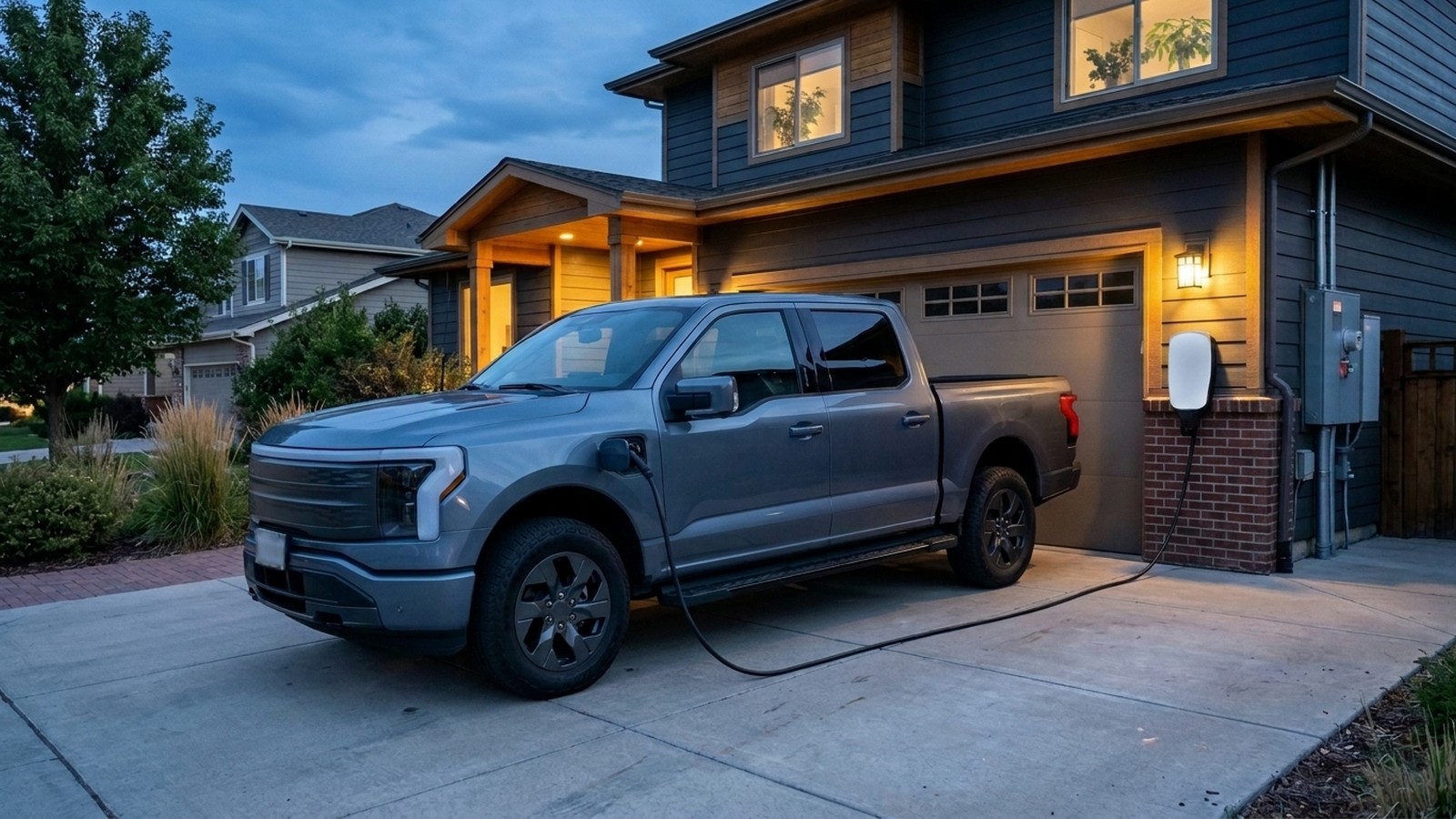
- A Bidirectional-Capable Vehicle: Verify that your exact trim and model year supports DC or AC export (such as the Ford F-150 Lightning, Chevrolet Silverado EV, Tesla Cybertruck, or certified European/Korean V2H models).
- A Certified Bidirectional EVSE: Purpose-built hardware such as a Wallbox Quasar 2, GM Energy V2H kit, or Tesla Powershare gateway that negotiates power safely with the vehicle’s BMS.
- An Automated Islanding / Transfer Switch: Legally mandatory everywhere—this isolates your home panel from utility lines during grid blackouts so exported power never energizes downed lines or endangers utility crews.
The Bottom Line for 2026 EV Buyers
For most drivers, fearing catastrophic battery replacement is outdated math—modern packs routinely outlast the rest of the chassis, and independent battery health certificates are quickly becoming standard in the used-EV market. If you want your next EV to double as emergency home backup, focus less on cycle myths and more on total installed cost: once you price the bidirectional charger, islanding gateway, and electrician labor ($3,500–$8,000+ depending on your main panel), V2H makes the strongest financial sense in outage-prone suburbs or electricity markets with steep peak-to-off-peak rate spreads.
Sources & Further Reading
- Amber — EV Battery Degradation: Why Real-World Fleet Data Surpassed the Fear
- EVChargers.eu — What Is Bidirectional Charging and How Warranties Treat V2H
- Bidirectional Energy — How V2X Cycling Affects EV Battery Health
- Sourceful Energy — Complete Guide to Battery Health With Bidirectional Charging
- SurgePV — Bidirectional EV Charger Selection and Islanding Switch Guide