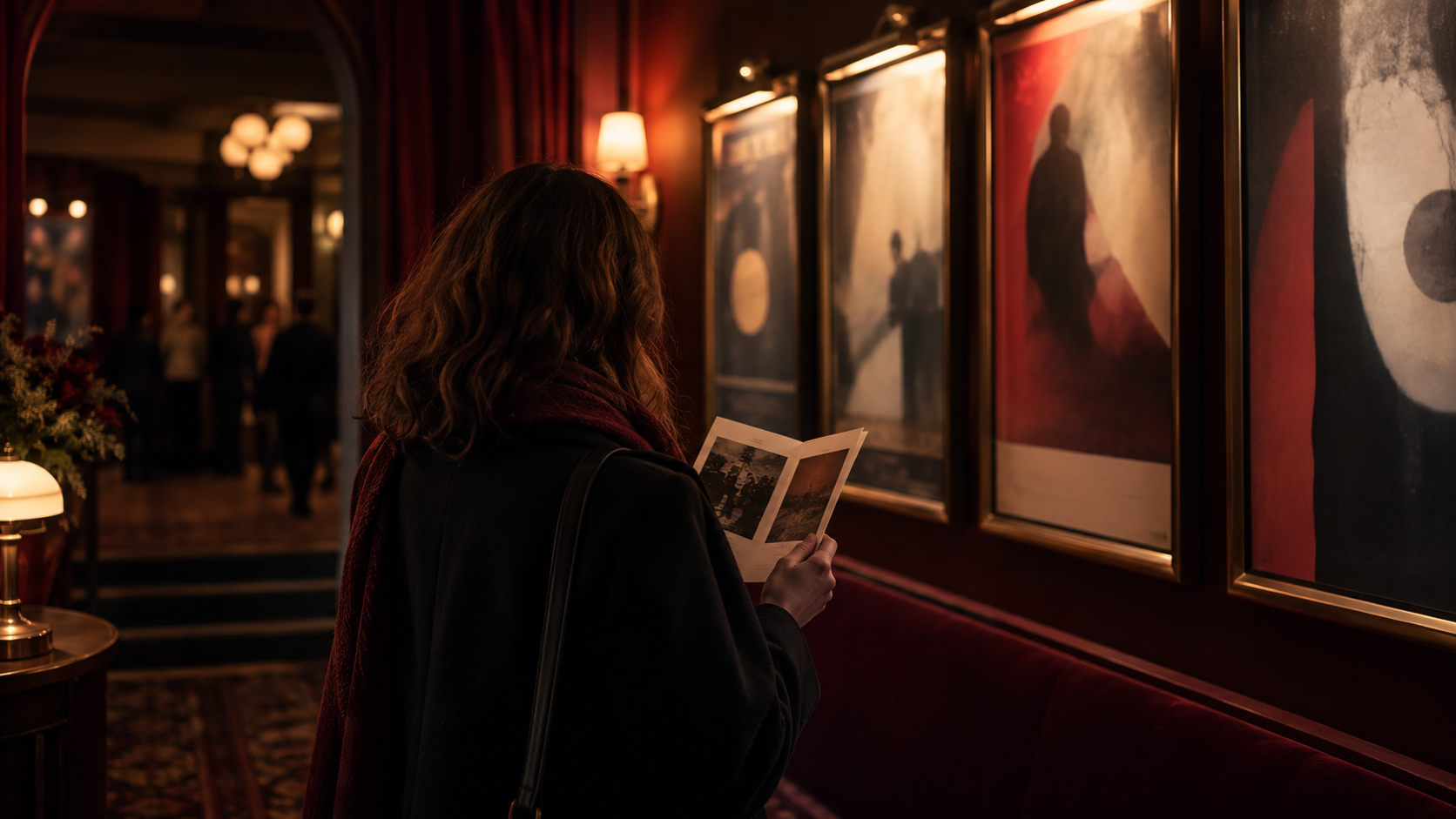
The best watchlists are not a queue of titles. They are a way to notice what you would otherwise miss.
Recommendation feeds are excellent at serving more of the same. That can make choosing easy, but it can also flatten a year of viewing into one genre, one era or one familiar tone. A richer watchlist starts with a few questions: what forms have I not seen? Which countries, decades or filmmakers are absent? What film would I be curious about even if it were not newly released?
Use a small set of lanes
Try five lanes rather than one endless list: a new release, a film made before 1970, a work from a country you have not visited on screen recently, a documentary, and one title selected for a craft element—editing, sound, production design, performance or cinematography. The point is not homework. It is to make chance more intentional.
The Library of Congress’s National Film Registry is a useful starting point, not because it tells you what to like, but because it collects films considered culturally, historically or aesthetically significant. Its material includes short films, documentaries, animation and home movies as well as well-known features.
Keep the list human-sized
Choose one or two titles for the week. Write a sentence after each: not a rating, just what stayed with you. A location, a cut, a line of thought, a scene that made another film look different. Over time, those notes will tell you more about your taste than a star score does.
If you share a household, let each person nominate a title without having to sell it. Alternating the choice makes the list feel less like an algorithm and more like a conversation.
Where to begin
Browse the registry by year and form. Pick a title you do not already “know” through clips, remakes or references. Read only enough background to give it context, then let the film do its work.
Sources
Background reviewed: Library of Congress: National Film Registry.
Choose an entry point, not a syllabus
Film history can seem intimidating when it is presented as a test. It is better treated as a set of doors. Pick one title, give it your full attention and follow one thread afterwards: the director, a performer, a city, a genre or the people who made its sound and images.
Make room for short films and documentaries
A watchlist becomes more varied when it includes forms that do not demand a full evening. The Library of Congress’s National Film Registry includes documentaries, animation and short works alongside familiar features. They can be an excellent way to add range without turning leisure into an assignment.
Share the selection
If you watch with someone else, take turns choosing and say why the film appealed. A little context before the lights go down can deepen a viewing; too much can turn it into homework. Keep the conversation for after.
Further reading: Library of Congress: National Film Registry.