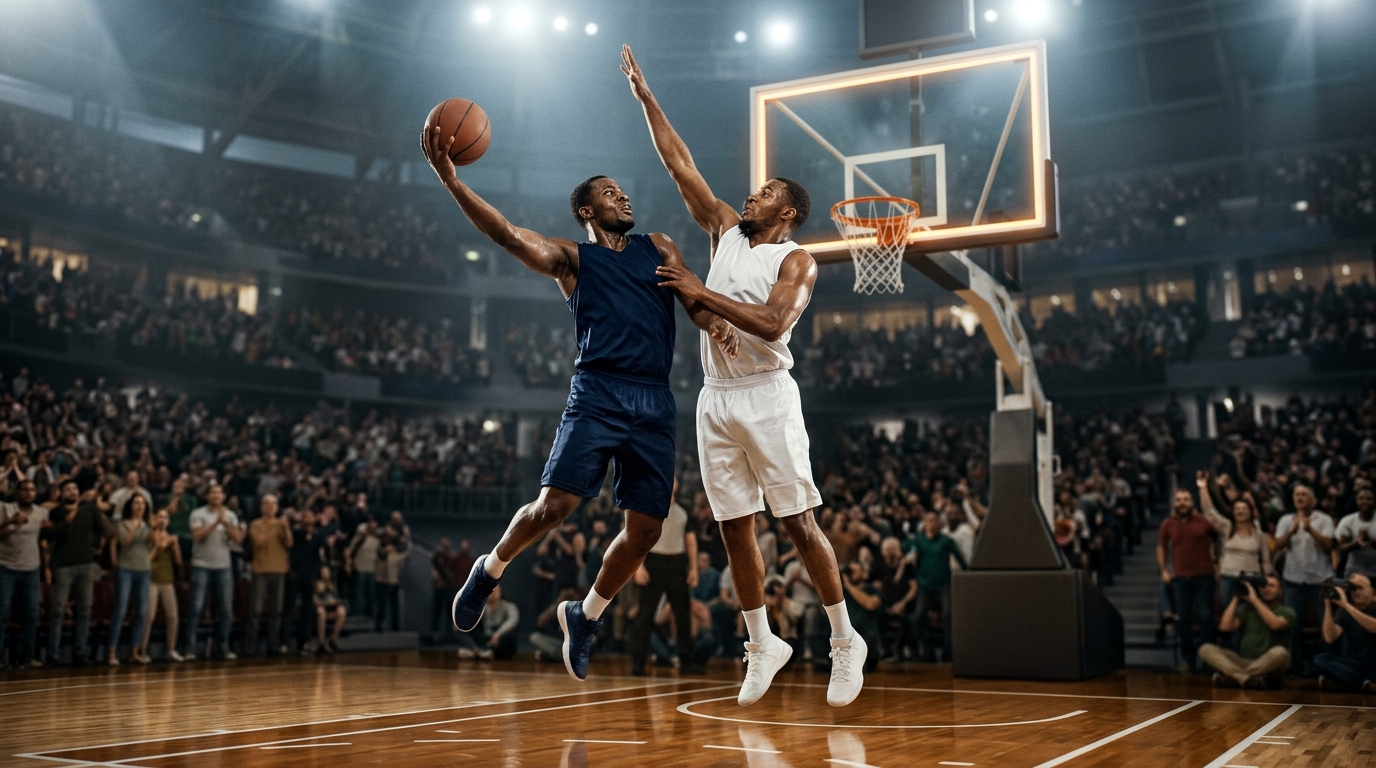
Every NBA season hits a weekend in late November where box scores start looking like video-game sliders got nudged past realistic limits. Across November 22–23, 2026, the league delivered three wildly different showcases of modern basketball—an offensive track meet in Denver that cleared 290 combined points, a nerve-shredding rookie rescue in Dallas, and a throwback defensive grind in Boston where 88 points proved enough to win.
At the center of the chaos stood Denver’s 151–145 overtime victory over the Chicago Bulls, a game that felt less like a November regular-season fixture and more like an exhibition of elite playmaking pushed to its physical ceiling. As The Washington Post recapped, Nikola Jokic logged the 202nd triple-double of his career with 37 points, 18 rebounds, and 11 assists, while Jamal Murray erupted for a season-high 45 points—including eight decisive points in overtime—to finally shake off a relentless Bulls squad.
Josh Giddey’s 22-Assist Clinic in a Losing Effort
What made Denver–Chicago unforgettable wasn’t just the Nuggets’ star duo trading haymakers; it was the performance on the visiting bench that nearly stole the building. Chicago guard Josh Giddey put up a stat line rarely seen in modern NBA history: 23 points, 14 rebounds, and a career-high 22 assists. Every time Denver threatened to pull away behind Jokic’s interior touch or Murray’s step-back jumpers, Giddey carved open the Nuggets’ transition defense with skip passes and pocket feeds that kept Chicago breathing into the extra period.
Yet overtime basketball often shrinks down to shot creation under heavy legs, and that is where Murray took ownership. Scoring eight of Denver’s overtime points while Jokic controlled the defensive glass, the Nuggets reminded the Western Conference why their two-man game remains one of the toughest late-clock puzzles in basketball—even on a night when their defense surrendered 145 points.
Cooper Flagg’s Poise Saves Dallas From an 18-Point Collapse
Over in Dallas, Mavericks fans experienced a very different kind of stress test. Up 18 points in the fourth quarter against the Utah Jazz, Dallas watched its cushion evaporate behind a blistering shooting storm from Utah’s Svi Mykhailiuk, who poured in a career-high 39 points fueled by ten three-pointers. Suddenly tied down the stretch, a game that looked safely tucked away turned into a two-possession coin flip.
That set the stage for rookie forward Cooper Flagg. Finishing with 28 points on the night, Flagg drew contact in the closing seconds and stepped to the free-throw line with 3.7 ticks left on the clock. As Inquirer Sports reported, the rookie calmly sank both free throws to seal a 116–114 escape. For a young star carrying enormous expectations in his debut NBA campaign, closing out a collapsing fourth quarter at the stripe carried far more weight than an empty blowout stat line ever could.
Miami’s Quiet Surge and Golden State’s Defensive Throwback
Away from the overtime fireworks and buzzer-beater tension, two other results reshaped conference momentum over the weekend:
- Miami makes it seven straight: The Heat rolled past the Oklahoma City Thunder 123–113 to extend their winning streak to seven games, a run dissected by Fadeaway World as proof that Miami’s half-court spacing and physical defense are clicking simultaneously.
- Warriors grind out Boston 88–87: In stark contrast to Denver’s 151-point shootout, Golden State went on the road and edged the Celtics 88–87 in a bruising, half-court slog where every contested rebound felt like a playoff possession.
What Late-November Chaos Tells Us About the Standings
By late November, early-season shooting flukes usually cool off and true team identities start showing through. What jumped out across this weekend’s slate was the sheer stylistic variety among contenders. Denver can still win a 150-point shootout when Murray catches fire alongside Jokic’s metronomic triple-doubles—even though giving up 145 points at home will give head coaches plenty of defensive film to dissect before December’s road swings. Miami, meanwhile, is stacking wins through balanced execution and depth against top Western opposition like Oklahoma City, turning a seven-game streak into real Eastern Conference separation.
Golden State’s 88–87 survival act in Boston offered the sharpest contrast of the entire slate. In an era where 130-point nights feel routine, grinding out an ugly road win in the eighties proved the Warriors can still win when perimeter shots stop falling—relying on switch discipline, late-clock rebounding, and veteran composure in hostile territory.
Meanwhile, for franchises banking on next-generation cornerstones—from Dallas trusting Cooper Flagg with the ball in the final five seconds to Chicago handing the offensive keys to Giddey in high-pace battles—these tight late-November nights serve as an accelerated playoff rehearsal. Watching a rookie step to the line after an 18-point lead vanishes tells a coaching staff far more than any blowout win ever could. Before Thanksgiving week even tips off, the league’s gap between headline talent and margin-for-error execution has rarely looked sharper.