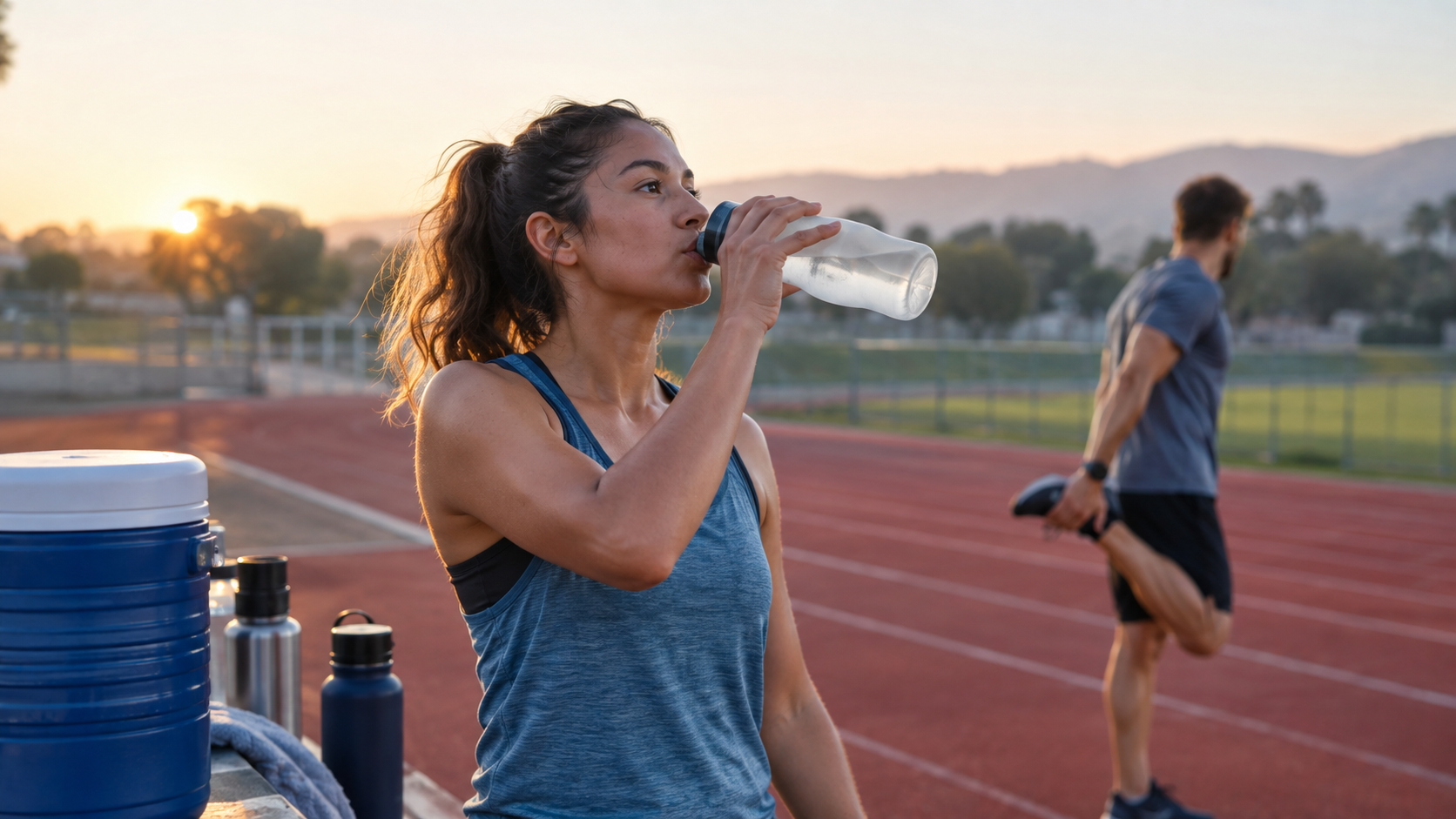
A hot forecast does not have to cancel a session. It does change the session you should plan.
Heat makes familiar effort feel less familiar. A run, training drill or pickup game that is comfortable in mild weather can become a poor test of toughness when the temperature rises. The sensible adjustment is not to chase the same pace. It is to protect the habit of showing up while leaving enough room for the body to adapt.
Start with the conditions, not the old plan
Check the forecast before you leave and move the session to the cooler part of the day where possible. Shade, a breeze and a route with easy access to water are practical advantages. If conditions are unusually hot or humid, shorten the session and take the intensity down. The U.S. Centers for Disease Control and Prevention advises athletes to start slowly, build gradually and drink more water than usual rather than waiting to feel thirsty.
This is especially relevant at the beginning of a warm spell. Acclimatisation takes time. Trying to make up for a missed hard workout in one punishing afternoon is rarely a good trade.
Give the warm-up a purpose
Use the opening minutes as a check-in. Walk, jog or move through simple sport-specific drills at an easy level. Notice whether breathing, balance and effort feel ordinary. A useful rule for recreational training: if the easy part is already uncomfortable, the main set does not need to be heroic.
Bring water, wear lightweight clothing suited to the conditions and tell a teammate or training partner where you are going. For longer sessions, plan the drinking stops before you begin, not after you are depleted.
Know when the plan ends
Feeling faint or weak is a stop signal, not a cue to push through. Move to a cool place and seek medical attention promptly for signs of heat illness. The CDC also advises athletes and coaches to keep an eye on one another; performance is a poor measure of someone else’s wellbeing on a hot day.
There is no prize for treating every session as a test. A controlled 30 minutes in difficult weather can be a better training decision than an hour that leaves you wiped out for days.
A simple hot-day checklist
- Move the session earlier or later if you can.
- Start easier than usual and reassess after 10 minutes.
- Carry water or plan reliable access to it.
- Choose shade and a route with an easy exit.
- Stop if you feel faint, weak or unwell.
This article is general information, not individual medical advice. If you have a health condition, take medication that affects heat tolerance, or have had heat illness before, ask a qualified clinician what is appropriate for you.
Sources
Guidance reviewed: CDC: Heat and Athletes.