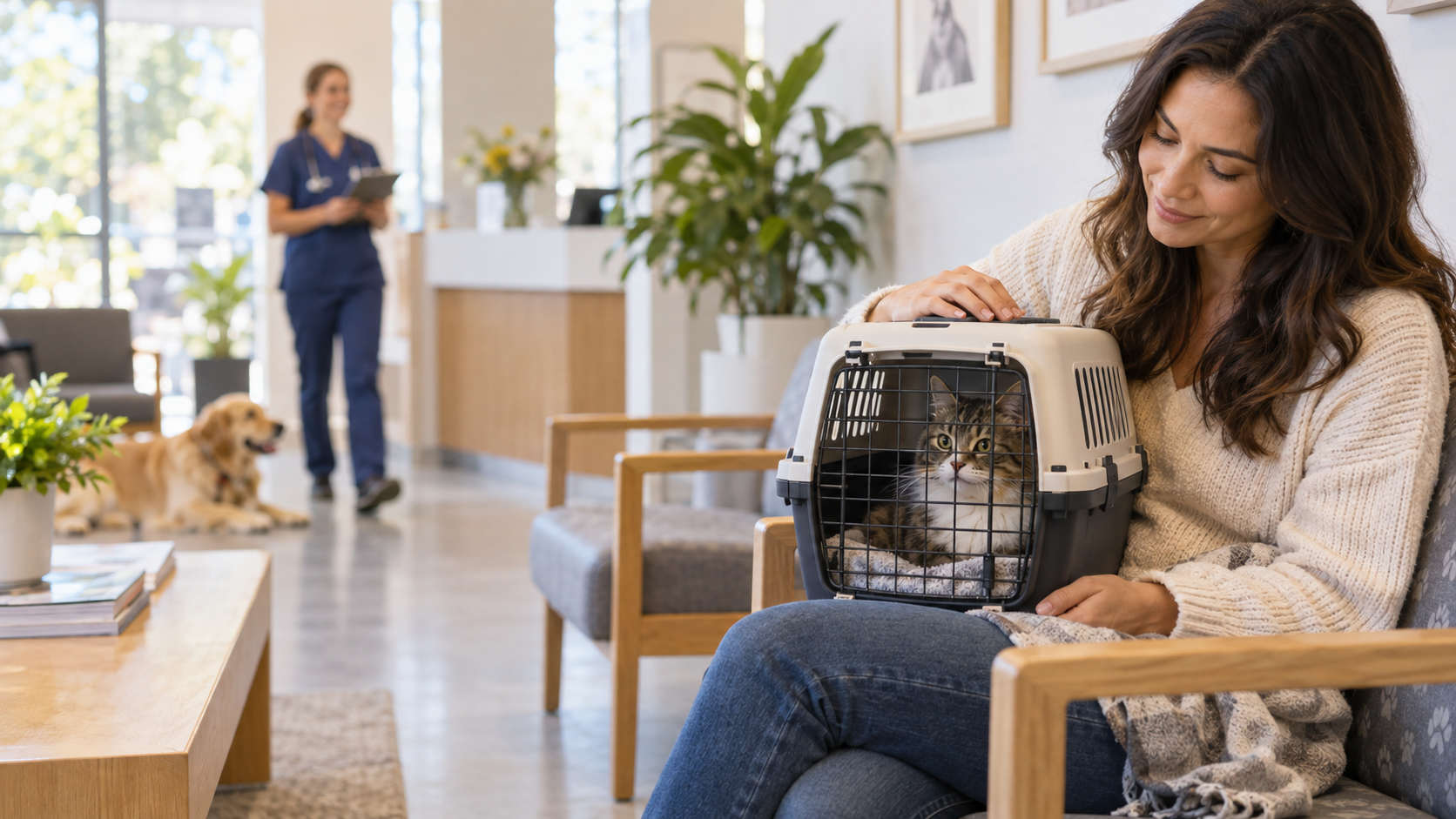
A routine veterinary visit can be easier for pets and people when preparation starts before the journey.
Make the carrier or car less unfamiliar
Leave a carrier accessible at home rather than bringing it out only before an appointment. For dogs, short, positive car journeys can make travel feel less novel. Move at your pet’s pace; forcing an anxious animal through a new experience can make the next one harder.
Practise gentle handling
Brief, calm handling of paws, ears and other areas can help a pet become more comfortable with the kind of examination a veterinarian may need to do. Keep sessions short and stop before your pet becomes distressed.
Bring useful observations
Write down changes in appetite, movement, sleep, toileting or behaviour, and bring a current list of medications or supplements. A short video can help explain an intermittent concern—but urgent symptoms should be discussed with a veterinarian promptly rather than waiting for a routine visit.
Ask for the right support
Tell the clinic if your pet is fearful, reactive or has had a difficult visit before. The team may be able to suggest appointment timing, handling approaches or other preparation tailored to your animal.
Further reading: American Veterinary Medical Association guidance on socialisation and preparation. For individual health concerns, consult a veterinarian.