Before buying a bigger appliance or replacing every window, learn where your home is actually losing comfort.
A chilly room or stubbornly high cooling bill encourages big ideas: new windows, a new system, a full renovation. Sometimes those are the right answers. Often, the first useful step is much quieter—finding the gaps where air is moving through the home.
An energy assessment gives that work an order. The U.S. Department of Energy describes it as a way to understand how a home uses energy and identify cost-effective improvements. You can begin with a careful walk-through, then call in a qualified professional for issues that involve the building envelope, combustion equipment or persistent moisture.
Look where different materials meet
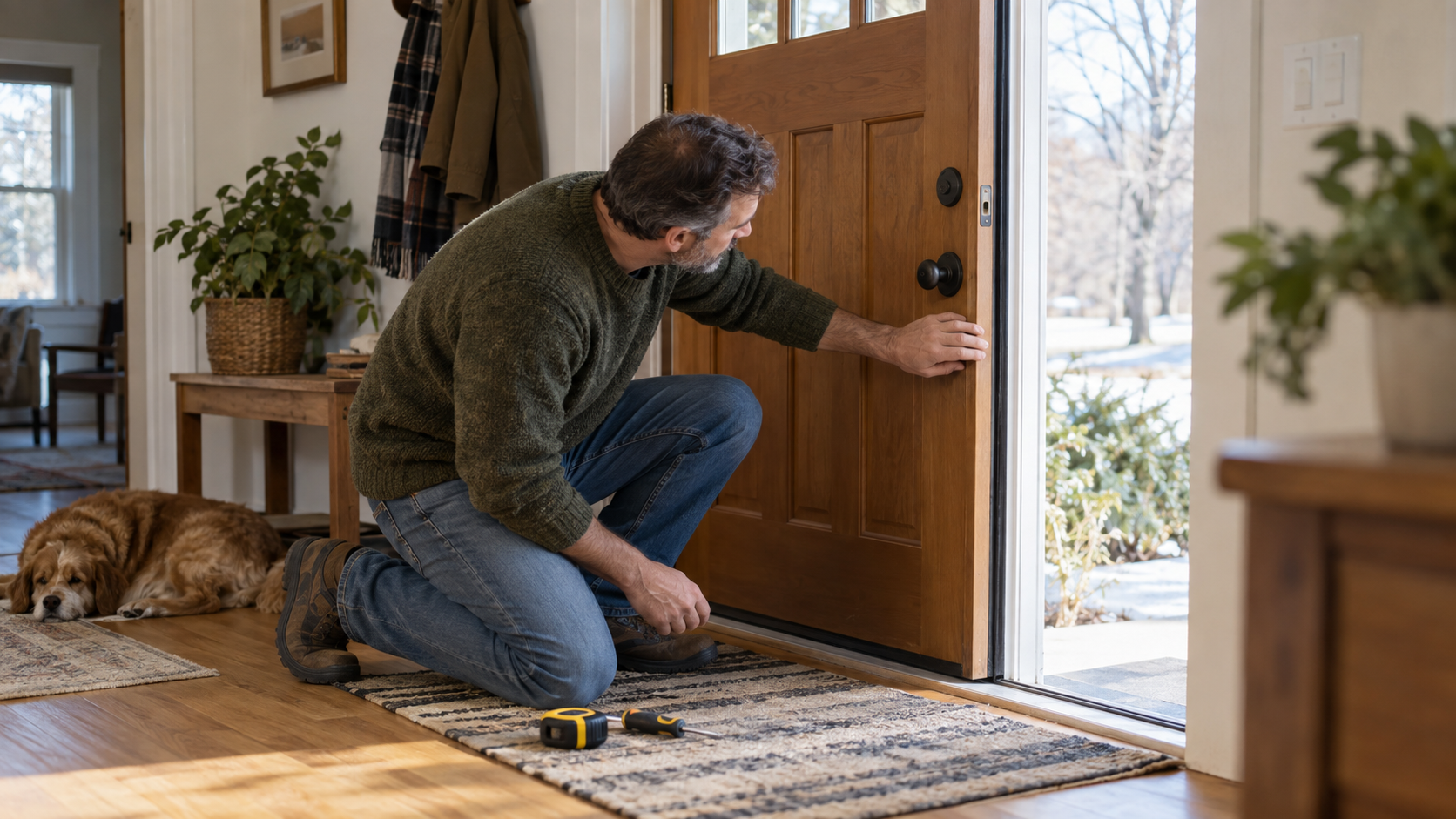
Start at the obvious places: exterior doors, operable windows, attic hatches and vents. Then look at the less obvious transitions—where plumbing, wiring or cable enter the building; where a chimney meets siding; around recessed lights; and at the junctions of foundation, walls and floors. The useful question is not “does this look old?” but “can air get through here?”
On a cool, windy day, you may notice a draft with the back of your hand. For a more methodical inspection, the Department of Energy outlines simple tests using smoke or light. Take care around open flames and never treat a DIY check as a substitute for safety work on gas appliances, flues or electrical systems.
Fix the low-risk basics first
Weatherstripping belongs on moving parts such as doors and operable windows. Caulk is generally for fixed gaps around frames and other stationary components. Both can be useful, but the correct material and surface preparation matter. If a seal fails quickly, water is collecting, or there is visible damage, pause before adding another layer.
Ventilation matters too. A tighter home is not automatically a healthier home. The Department of Energy warns that air sealing must be considered alongside fresh-air needs and the safe operation of fuel-burning equipment. That is why bigger projects are a good moment for an energy auditor or certified HVAC professional.
Put expensive decisions at the end
Keep a short record: the room, time of day, weather, what you felt, and what you found. It gives a contractor something more useful than “the house feels drafty.” It also helps you spend in sequence: diagnose first, make straightforward repairs, then consider insulation, equipment or window work with evidence in hand.
Sources
Guidance reviewed: U.S. Department of Energy: Why Energy Efficiency Matters and its Consumer Guide to Home Energy Assessments.
Do not seal over a warning sign
Peeling paint, staining, mould, persistent condensation or a musty smell are reasons to investigate moisture before treating a gap as a simple caulking job. Air sealing can improve comfort, but it changes how a building manages air and moisture. A qualified professional is the right next call when fuel-burning appliances, a chimney, electrical work or persistent water intrusion are involved.
Turn observations into a useful brief
Photograph what you find and note the weather, room and time of day. Ask a contractor to explain the proposed fix, the material used, how it affects ventilation and what will be tested afterwards. A good diagnosis is a better investment than a rushed upgrade.
Further reading: U.S. Department of Energy: Consumer Guide to Air Sealing.