Ask international travelers what kills an overseas trip before anyone ever pulls out a credit card, and most will not blame hotel prices or long flights first. Increasingly, it is visa paperwork. According to the International Air Transport Association’s (IATA) 2026 Global Passenger Survey—drawing on more than 10,000 flyers across over 200 countries—43% of passengers say immigration and visa requirements discouraged them from visiting a destination, jumping sharply from 33% just a year earlier.
For national tourism ministries competing for 2027 holiday spending, that ten-point surge is a flashing red warning light. Governments worldwide are trying to tighten border verification without turning away high-spending leisure and business flyers who will happily redirect their trips to destinations with frictionless digital entry.
Inside the IATA Data: Flyers Want Digital Passports and Pre-Departure Clearance
As IATA’s 2026 survey highlights and Nomad Register’s analysis demonstrate, modern travelers are not pushing back against security screening—they are walking away from opaque, slow, paper-heavy embassy processes. Among flyers deterred by visa hurdles, 53% cited overly complex procedures as the main dealbreaker ahead of fees or privacy concerns.
Meanwhile, passenger appetite for digital border tools has surged ahead of government bureaucracy:
- 84% Want Digital Passports for Check-In: Four in five respondents are eager to use a smartphone-verified Digital Travel Credential (DTC) for online check-in, and 82% want to share verified digital passport data with airlines at booking to get instant visa guidance.
- 86% Back Pre-Departure Digital Sharing: Rather than waiting at an arrival desk after a 14-hour flight, travelers overwhelmingly prefer submitting visa and immigration details digitally before leaving home.
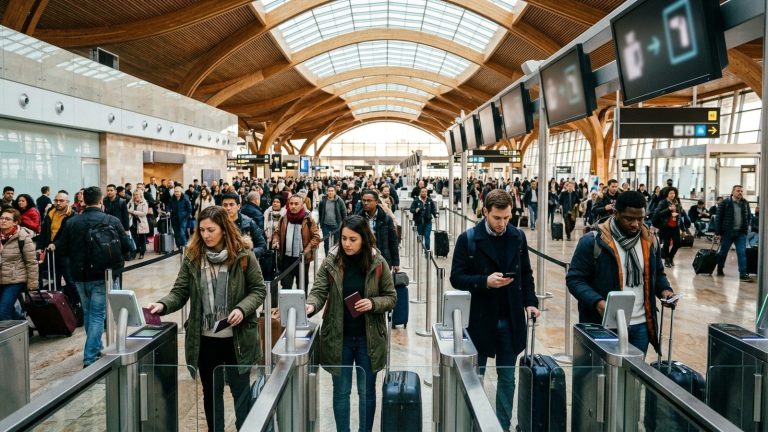
- 58% Already Use Airport Biometrics: Up from 50% in 2025, nearly three in five flyers cleared biometric e-gates or facial checkpoints over the past year—posting an impressive 87% satisfaction rating, with 78% willing to use biometrics to skip repetitive document checks.
Asia’s Competitive Play: Visa-Free Corridors and Charter Expansion
While over 100 countries now offer some form of eVisa, IATA warns that inconsistent airline verification standards still leave check-in agents confused and passengers nervous. Destinations looking to capture regional momentum are responding by dropping visa barriers outright for targeted markets.
In mid-November, for instance, the Philippine government extended 14-day visa-free entry for Chinese leisure and business visitors arriving through Manila’s NAIA and Mactan-Cebu through January 2028—a policy shift the Philippine News Agency notes is expected to boost direct charter flights and resort bookings across Cebu, Boracay, and Palawan. Across ASEAN, similar digital arrival cards and targeted waivers are proving that removing friction turns spontaneous weekend travel into real hotel revenue.
Europe’s Biometric Rollout—and Why Transition Traps Still Catch Flyers
In Europe, however, the road toward seamless digital borders remains bumpy heading into 2027. The EU’s Entry/Exit System (EES) is replacing manual passport stamps with centralized biometric facial and fingerprint capture at Schengen ports of entry, the UK’s £20 Electronic Travel Authorisation (ETA) is mandatory for visa-exempt arrivals, and the EU’s own ETIAS pre-screening layer sits queued behind EES stabilization into 2027.
Until systems harmonize, travelers relying on outdated pre-2026 checklists risk getting turned away at departure gates over a missing £20 digital authorization or transit rule.
Three Habits to Bulletproof Your 2027 International Trips
- Check Transit Airports, Not Just Final Destinations: A quick connection in London, Toronto, or a Schengen hub can trigger ETA or transit-clearance rules even if you stay airside.
- Bookmark Official Government Portals Only: Digital authorizations attract lookalike commercial sites charging $80–$150 for a $20 filing—always verify
.gov,.gov.uk, oreuropa.eudomains. - Add Buffer Time for First-Time Biometric Enrollment: On your initial trip into a Schengen EES airport, pad layovers by at least 45 to 60 minutes for kiosk registration before catching onward trains or regional flights.
Why Airlines Are Pushing Governments Toward Standardized Digital Credentials
Behind the survey numbers sits a pressing operational problem for global aviation. Whenever countries roll out incompatible eVisa portals, PDF letters, or unlinked travel authorizations, airline gate agents become de facto immigration officers—forced to interpret dozens of national rules in 45 seconds under boarding pressure, risking heavy government fines if even one passenger boards with incomplete paperwork.
That is why IATA is lobbying ministries to adopt interoperable Digital Travel Credentials (DTCs) built on International Civil Aviation Organization (ICAO) cryptographic standards. In practical terms, a single encrypted credential stored in your phone wallet lets airlines verify your passport validity and electronic visa clearance automatically at check-in—cutting boarding queues while giving destinations the pre-arrival security visibility they want without driving 43% of prospective tourists away. Until governments finish bridging those backend portals, however, smart flyers still treat entry verification with the same discipline as packing luggage: verify rules directly on official embassy sites two weeks before departure and screenshot every approved e-authorization confirmation.