Helping a dog or cat reach a healthy weight rarely fails because owners do not care—it fails because eyeballing scoops and inconsistent feeding schedules make calorie control nearly impossible. Both automatic pet feeders and slow-feed bowls promise to help, but they solve two completely different problems.
Automatic Feeder vs. Slow-Feed Bowl at a Glance
| Feature | Automatic Feeder | Slow-Feed Bowl |
|---|---|---|
| Primary Benefit | Exact portion & schedule control | Slows down fast eaters |
| Best For | Multi-person homes, busy schedules, early-morning begging | Pets that gulp food in under 60 seconds |
| Typical Price | $40–$120 | $10–$25 |
| Maintenance | Weekly hopper & sensor cleaning | Daily dishwasher or hand wash |
When an Automatic Feeder Wins
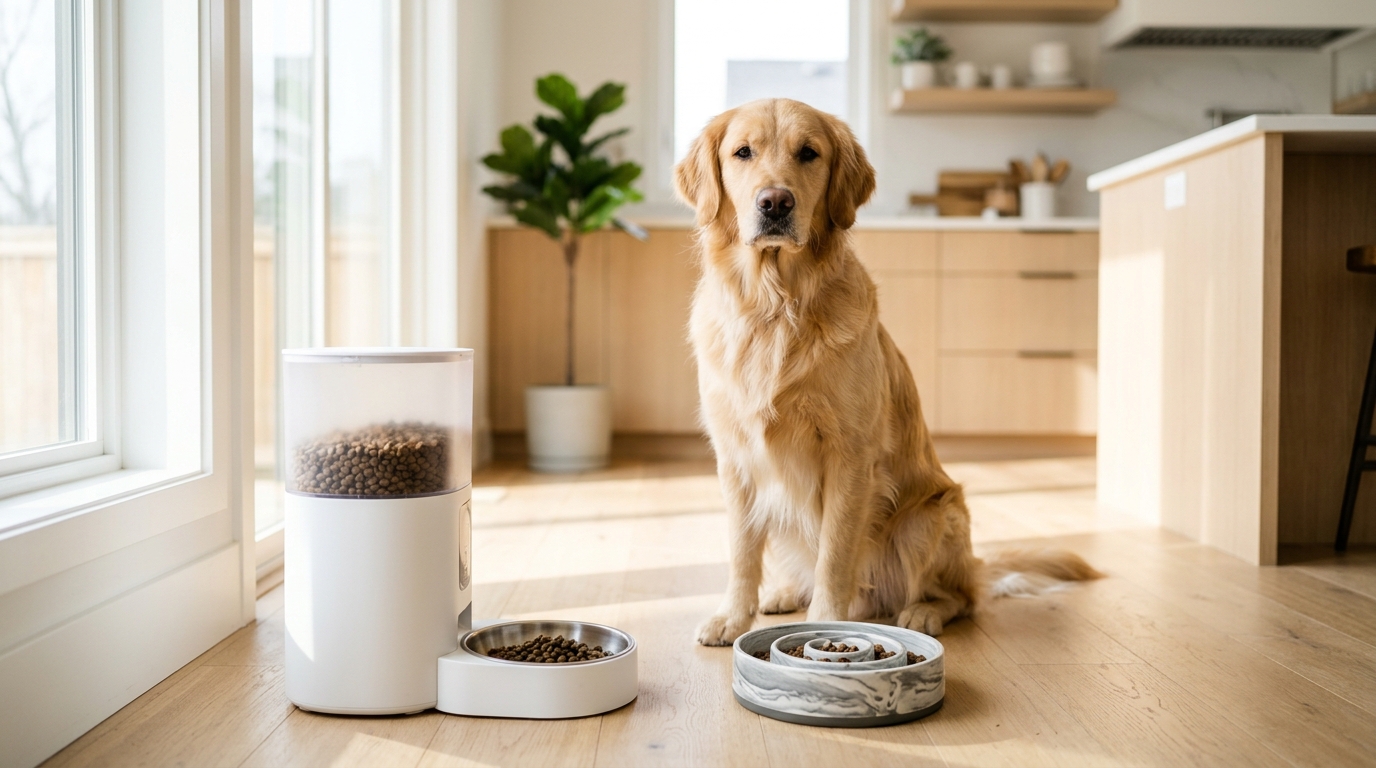
If more than one person feeds your pet—or if you tend to pour a little extra when your pet begs—an automatic feeder removes human guesswork. Dispensing measured portions on a fixed schedule pairs naturally with a realistic pet weight routine because every gram is consistent day to day.
When a Slow-Feed Bowl Wins
If your pet already gets the right daily portion but inhales it in 30 seconds and immediately acts hungry, a slow-feed maze bowl or lick mat stretches mealtime to 10–15 minutes. Slower eating gives fullness signals time to register and reduces post-meal regurgitation.
The Verdict
Use an automatic feeder to control how much and when your pet eats, and a slow-feed bowl to control how fast they eat. Before making big calorie cuts, confirm your pet’s target weight at your next checkup—and if clinic trips are tough, our guide to making routine veterinary visits less stressful can help.