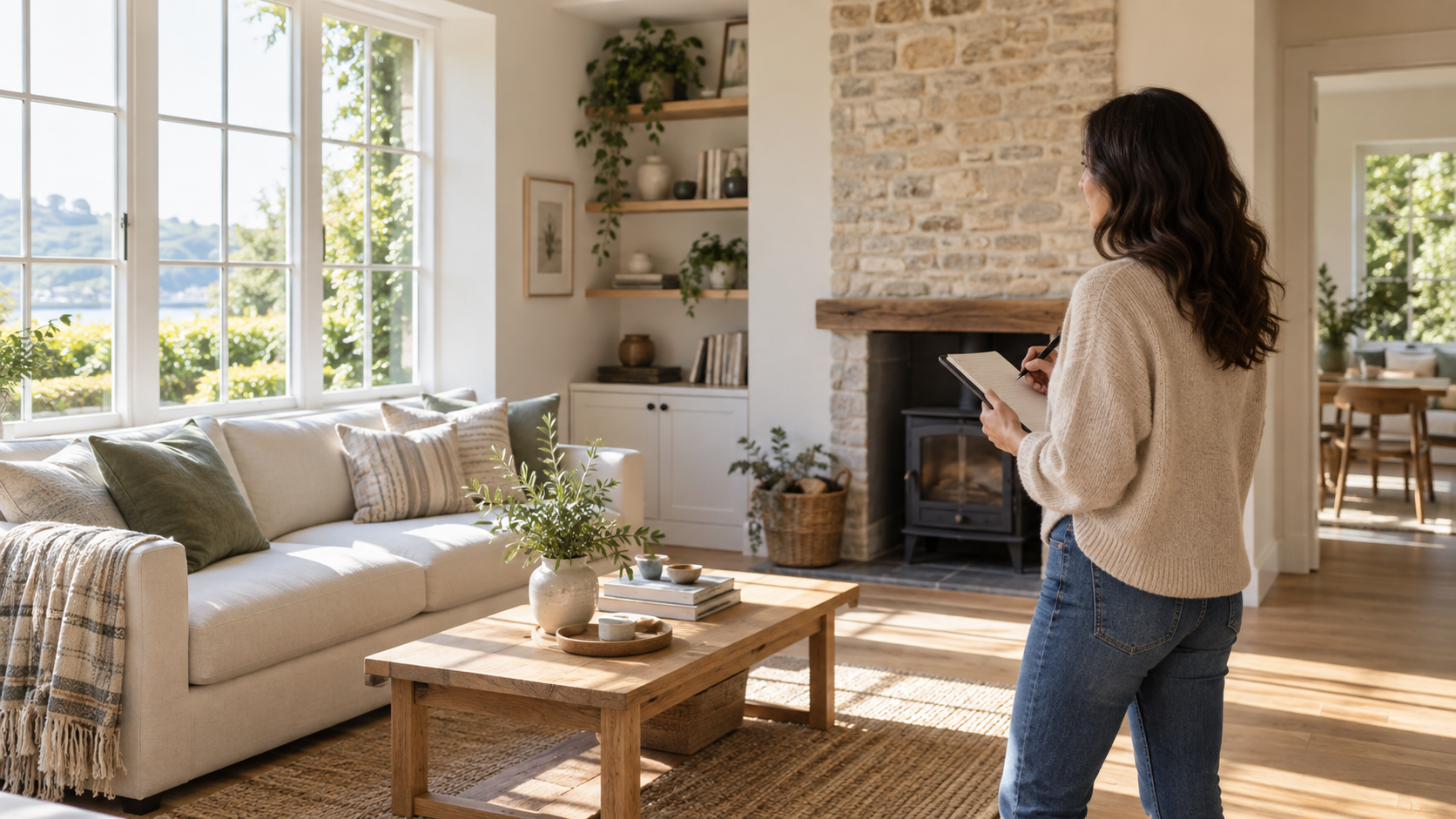
A property viewing is not a test of whether you can imagine a beautiful life there. It is a chance to ask whether the home will work in ordinary life—and what it may demand from you later.
Visit with a short list
Write down the questions that matter before you arrive: natural light, storage, noise, mobile coverage, access, maintenance, shared costs and the route at the times you would actually use it. Photos and first impressions are helpful, but a checklist keeps the visit honest.
Look beyond finishes
Open and close windows, check for signs of moisture, ask about the age and service history of major systems, and notice how rooms connect. Cosmetic changes are usually easier to understand than structural or mechanical issues. Do not rely on a viewing alone to assess a property’s condition.
Ask about the surrounding reality
Find out what is included, what is shared, what recurring costs apply and what development or environmental risks may affect the area. Local rules, disclosures and buying processes differ, so use qualified local advice before making an offer.
Use independent expertise
A thorough independent inspection can reveal issues that a quick viewing cannot. Give yourself time to read the report, ask follow-up questions and understand your options under the proposed contract.
Further reading: Consumer Financial Protection Bureau guidance on independent inspections. This is general information, not legal, financial or property advice.