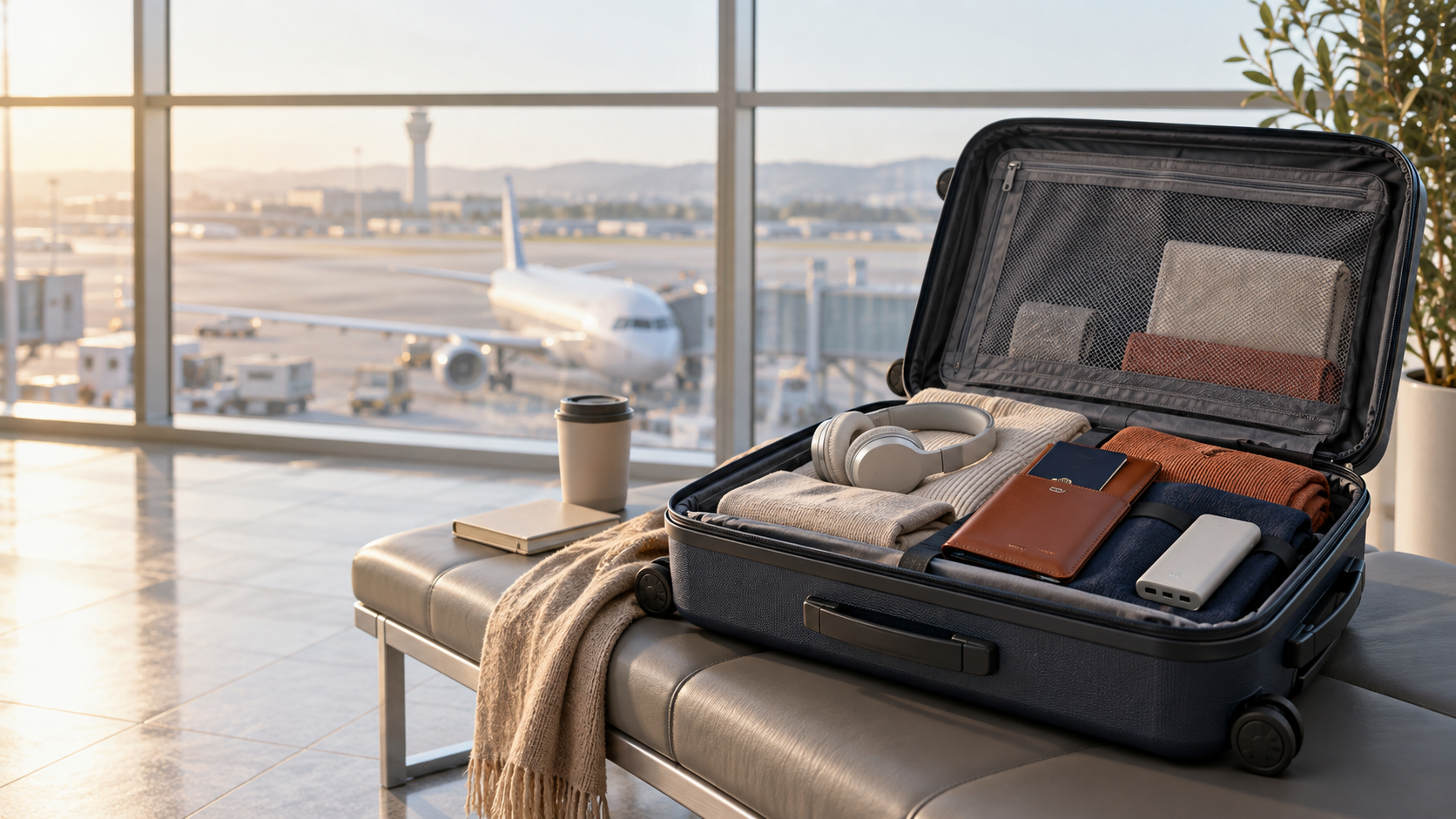
Carry-on packing is less about fitting in everything and more about packing the few things you cannot afford to lose access to.
Check the airline first
Cabin-bag allowances can differ by airline, ticket type, cabin and aircraft. Confirm the exact size, weight and personal-item rules for every flight in your itinerary before you pack.
Keep the essentials with you
Travel documents, medication, valuables and a change of clothes belong close at hand. Carry-on space can run out at the gate, so pack those essentials in the small item that stays under the seat where possible.
Handle batteries deliberately
Airlines commonly require spare lithium batteries and power banks in carry-on baggage, protected against short circuits. Rules can change by carrier and destination; check the airline’s dangerous-goods guidance before travel.
Make security easier
Place liquids and electronics where they can be reached quickly. Security requirements are set locally, and airport rules can differ even on the same journey. When in doubt, consult the departure airport and airline rather than relying on a generic checklist.
Further reading: IATA’s passenger baggage rules.
Pack for the first day, not every possibility
A carry-on works when the things you will genuinely need on arrival are easy to find: travel documents, medication, a change of clothes, a charger and basic toiletries that meet the airport’s rules. Put them in the same pocket every trip. It reduces the frantic search at security and makes a delayed checked bag inconvenient rather than disastrous.
Check the airline, then the itinerary
Cabin-bag size and weight allowances vary by airline, fare and route. A bag that fits one carrier’s allowance may not fit another’s, especially on a connecting flight. IATA provides general passenger guidance, but the operating airline’s own page is the final word for your booking.
Make security less dramatic
Use small pouches to separate liquids, cables and documents. Keep sharp objects and large liquid containers out of cabin baggage. If you are travelling with medical supplies or valuable equipment, check the specific airline and airport requirements beforehand rather than relying on an old packing list.
Further reading: IATA baggage guidance.