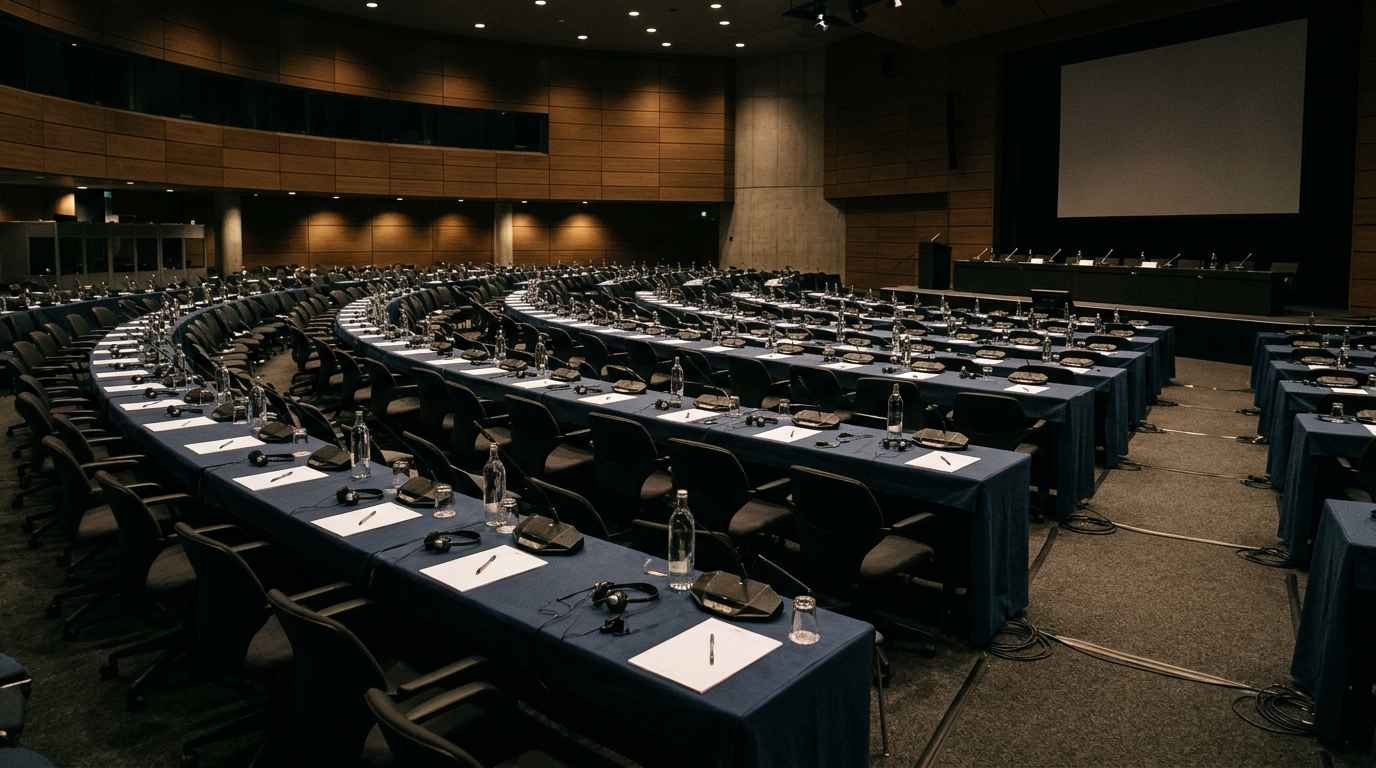
When delegates finally walked out of the plenary hall in Antalya, Türkiye, on Sunday, November 22, 2026, the clocks had run roughly 44 hours past the summit’s scheduled Friday closing. Months of diplomatic prep and two weeks of marathon negotiations ended not with a watered-down compromise, nor even a last-minute face-saving footnote, but with no overarching political agreement at all. For the first time since the infamous Copenhagen breakdown in 2009, a United Nations climate conference closed without adopting a headline cover decision.
What unfolded at COP31 in Antalya was more than a routine squabble over commas and climate finance formulas. It exposed a structural split inside global climate diplomacy that had been papered over since COP28 in Dubai three years ago: whether major oil and gas exporters will still permit explicit UN language calling for a transition away from fossil fuels, or whether multilateral climate talks will retreat into non-binding industrial pledges centered on carbon capture.
How the Draft ‘Antalya Pact’ Broke the Room
Under the joint Türkiye-Australia co-presidency, COP31 President Murat Kurum floated a late-stage draft decision—dubbed the “Antalya Pact”—intended to bridge widening chasms between fossil-fuel producers and climate-vulnerable states. Instead, the text detonated what remained of the room’s trust. Rather than squarely reaffirming the COP28 consensus to transition away from coal, oil, and natural gas, the draft reframed energy policy around broad industrial electrification targets and leaned heavily on unproven carbon capture and storage (CCS) pathways.
That omission proved non-negotiable for a broad coalition uniting the European Union, the United Kingdom, small island developing states, and several Latin American and Pacific nations. Speaking on behalf of the EU presidency, Ireland’s Climate Minister Darragh O’Brien made clear that European delegates would not put their signatures on a document that effectively “greenwashes fossil fuels” or treats the past three years of agreed climate language as optional. As The Guardian reported from Antalya, petrostates including Saudi Arabia and Russia resisted restoring direct fossil-fuel phaseout phrasing, leaving Kurum with no viable path to gavel through a consensus text.
“There is no ambiguity in the science, and there can be no ambiguity in our responsibility.”
António Guterres, UN Secretary-General, following the close of COP31
Why Consensus Diplomacy Hit a Wall in 2026
To understand why Antalya collapsed where earlier summits limped across the finish line, you have to look at the geopolitical climate outside the conference center. Throughout 2026, energy security anxieties, tariff disputes, and strained great-power relations have pushed national capitals toward protective industrial policy rather than shared multilateral concessions. When a single objecting bloc can exercise a de facto veto under the UN’s consensus rule, any major summit held in an era of sharp economic rivalry is one draft paragraph away from deadlock.
As Health Policy Watch noted, COP31 also suffered from a widening credibility gap between ambition and financing. Developing economies arrived in Türkiye demanding firmer assurances on adaptation funding and resilience programs for vulnerable mountain and coastal regions. When those financial guarantees failed to materialize at scale, poorer nations saw little reason to accept an energy compromise that also diluted fossil-fuel commitments. In effect, neither side had enough left on the table to justify swallowing the other’s red lines.
What Actually Happened to the Core Deliverables
Although no overarching political cover decision survived the final plenary, technicians and negotiators did not walk away completely empty-handed on operational workstreams. Still, the absence of a political anchor leaves major items hanging in diplomatic limbo heading into 2027:
- Fossil-fuel transition benchmarks: Without a reaffirmed COP31 cover text, national climate plans due in the next review cycle lack fresh multilateral pressure to accelerate coal, oil, and gas wind-downs.
- Adaptation finance and resilience: Funding mechanisms meant to scale support for flood, heat, and glacier-melt adaptation were left without the political backing needed to unlock new donor pledges.
- Carbon capture vs. direct cuts: Petrostates succeeded in keeping CCS and abatement language central to the debate, signaling that future summits will face fierce fights over whether abatement tech can substitute for production cuts.
- UN credibility and process reform: Calls to reform the UNFCCC’s strict consensus requirement—long whispered in corridors—are returning to the forefront after a 44-hour overtime failure.
The Immediate Fallout for Markets and Policy
In the hours after the gavel fell without a deal, UN Climate Chief Simon Stiell and Secretary-General António Guterres both issued blunt warnings that diplomatic paralysis does not pause atmospheric physics. With global average temperatures hovering perilously close to a sustained 1.5°C overshoot, policy analysts at the World Resources Institute called the Antalya outcome a failure of political leadership that shifts even heavier responsibility onto national legislation and regional alliances.
Ironically, the collapse may accelerate clean-tech deployment outside the UN tent rather than slow it down. Even as diplomats sparred in Türkiye, solar, grid storage, and electric-vehicle adoption kept scaling in 2026 on pure unit economics. Yet economics alone cannot rescue low-lying nations that rely on international adaptation finance, nor can regional rules replace a global price signal on emissions. Antalya’s lasting lesson is stark: unless major economies rebuild trust on both financing and fossil-fuel timelines before COP32, the world’s flagship climate forum risks becoming a stage for deadlock rather than delivery.
Sources & Further Reading
- UN Türkiye — COP31 Ends Without Climate Pact as UN Chief Warns on Science
- The Guardian — COP31 Climate Talks End in Deep Division as Key Deal Rejected
- Health Policy Watch — Inside the COP31 Consensus Collapse in Antalya
- CNA — COP31 Climate Change Talks Collapse Without Overarching Agreement
- World Resources Institute — Statement on the Hollow Outcome of COP31