A road trip begins long before the first kilometre. A short, deliberate check gives you a better chance of avoiding preventable disruption—and lets you focus on the drive.
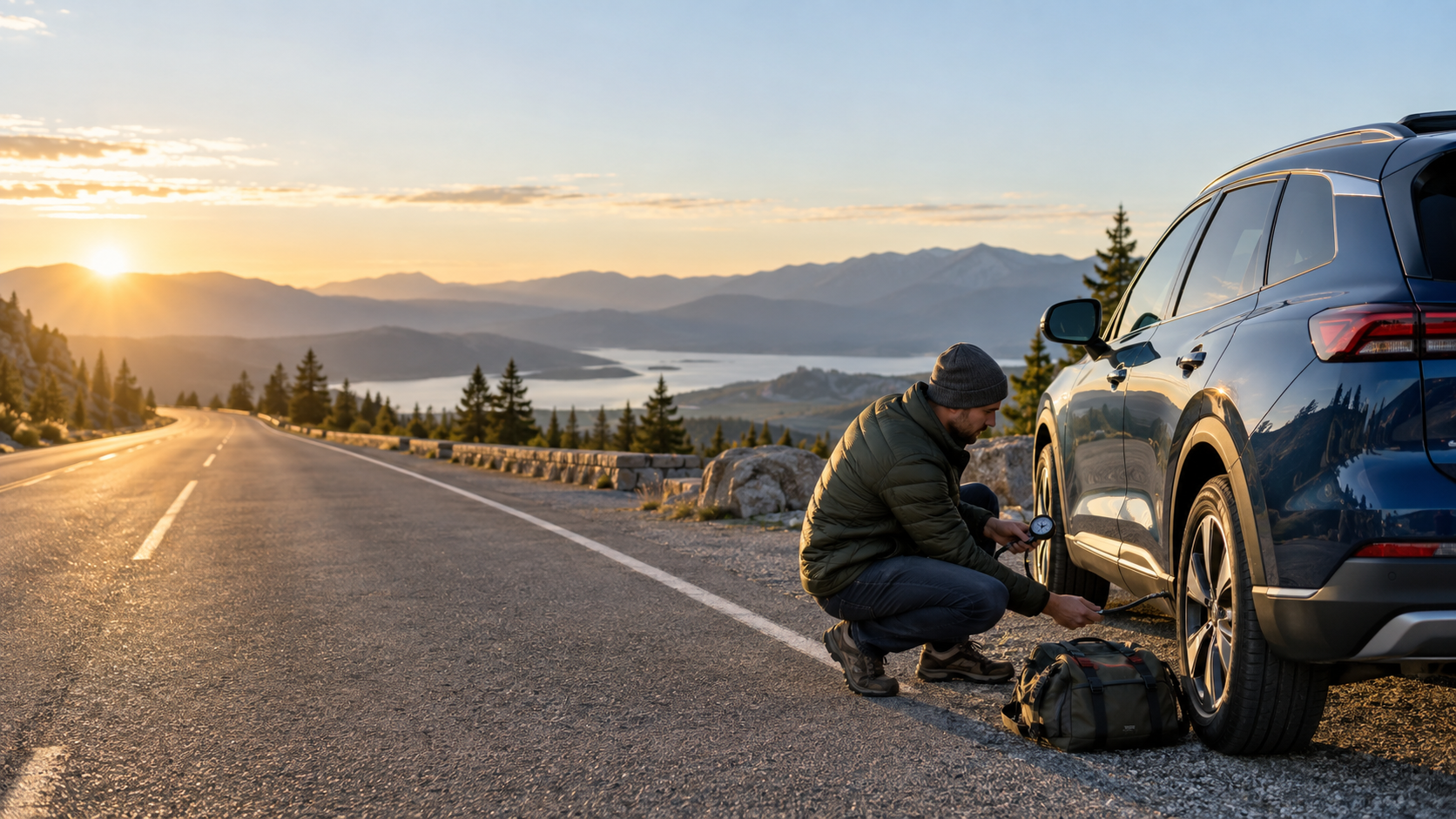
Check tyres when they are cold
Use the pressure listed on the vehicle’s door placard or in its manual, not the maximum printed on the tyre sidewall. Check the spare as well. Look for cuts, bulges and uneven tread wear; address any concern before a long drive.
Confirm the essentials
Check engine oil, coolant and washer fluid according to the vehicle manufacturer’s guidance. Make sure lights, wipers and brakes are working as expected. Carry the tools and equipment required for a tyre change only if you know how to use them safely.
Plan for people, not just the route
Build in breaks, share driving where possible and leave enough time that you do not need to rush. Seat belts are for every seat, every trip. Never drive while impaired or distracted.
Keep your documents and contacts close
Bring your licence, registration, insurance details and roadside-assistance information where applicable. Save accommodation and emergency contacts offline in case coverage drops.
Further reading: NHTSA’s road-trip and tyre safety guidance. Follow your local road rules and vehicle manufacturer guidance.
Plan the drive around attention, not just distance
A road trip becomes tiring long before a map says it should. Build in breaks before the day begins, particularly when several people will share the car or the route includes unfamiliar roads. A realistic plan leaves room for fuel, food, weather, traffic and a change of driver; an ambitious plan tends to turn every delay into pressure.
Make the car easy to assess
Walk around the vehicle in daylight. Check tyre condition and pressure against the vehicle guidance, lights, fluid levels and wiper performance. Pack the items that are difficult to replace at the roadside—charging cable, water, first-aid basics, a torch and any essential medication—where they can be reached rather than buried beneath luggage.
Use the last ten minutes well
Before leaving, set the route, secure loose items, adjust mirrors and make sure every passenger has a seat belt. If you are sleepy, upset or unwell, delay the departure. The U.S. National Highway Traffic Safety Administration’s seasonal driving guidance is a useful reminder that preparation is part of safe driving, not a separate chore.
Further reading: NHTSA summer-driving tips.