A burst water pipe doesn’t just ruin drywall—it can flood a basement or crawlspace in minutes while you’re asleep or away for the holidays. Yet most winter pipe failures happen in the same predictable spots: unheated garages, exterior wall cabinets, crawlspaces, and forgotten outdoor hose bibs.
Taking an hour to insulate exposed runs before the first hard freeze costs very little and requires zero specialized plumbing skills.
Start Outside: Disconnect Every Garden Hose
Leaving a garden hose attached to an exterior spigot is one of the fastest ways to split a pipe inside your wall. Water trapped in the hose freezes back into the faucet stem and cracks the brass or copper behind the siding.
- Unscrew all hoses and drain them before storing them for winter.
- Shut off interior isolation valves leading to outdoor spigots if your home has them, then open the outside tap briefly to bleed the remaining water.
- Snap on foam faucet covers over exterior bibs for extra wind protection.
Wrap Unheated Interior Runs
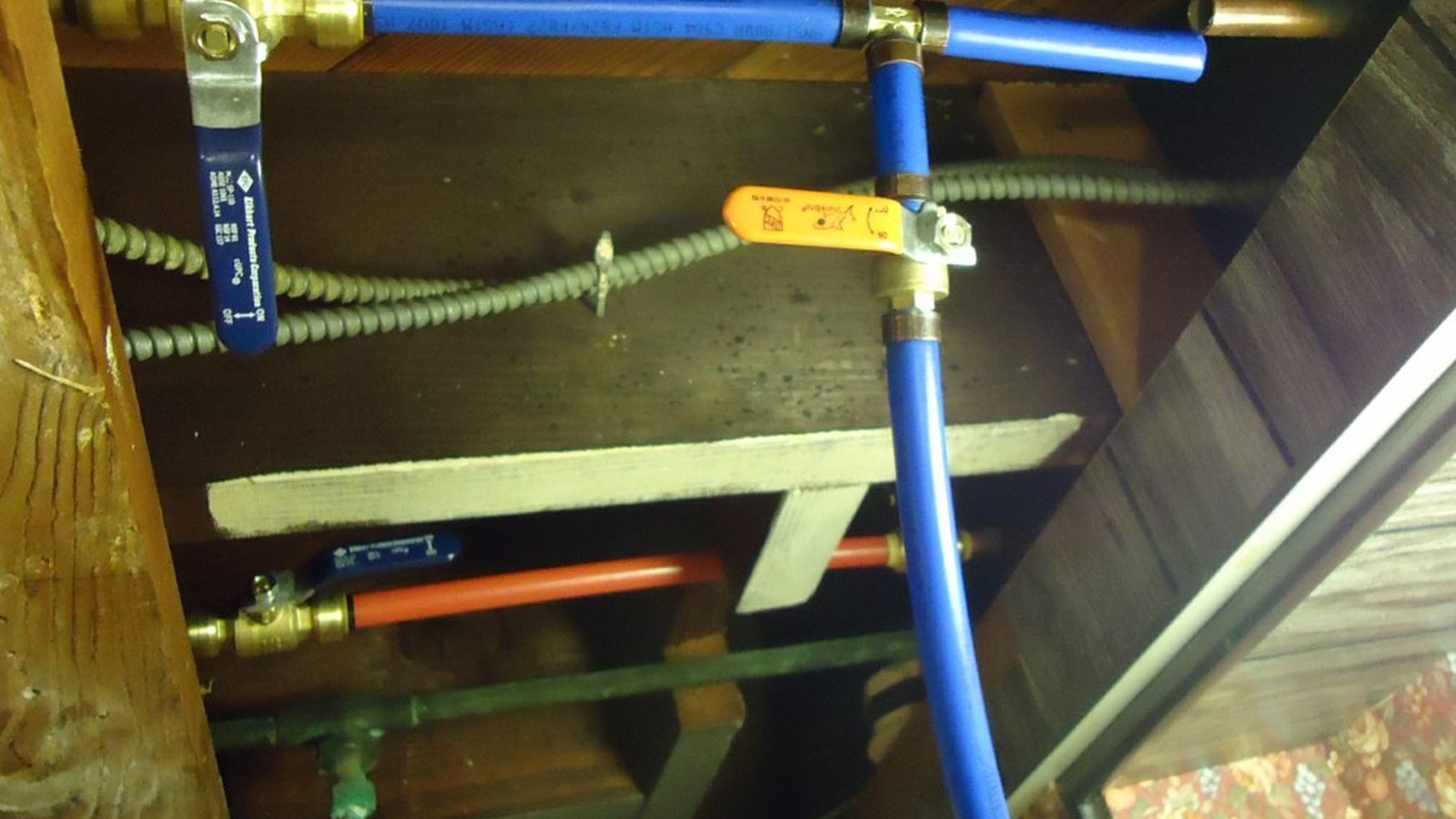
Walk through your basement, crawlspace, laundry room, and garage with a flashlight. Any hot or cold water line running along an uninsulated exterior wall or near a drafty rim joist should be covered with split-foam pipe insulation sleeves (matched to 1/2-inch or 3/4-inch pipe diameter). Tape the seams snug with foil or PVC pipe tape.
While you’re there, seal visible gaps where pipes pass through exterior walls using caulk or expanding foam—cold wind blowing through a quarter-inch hole freezes pipes far faster than still air.
What to Do on Extreme Freeze Nights
When overnight lows plunge well below freezing, open bathroom and kitchen sink cabinet doors along exterior walls so warm indoor air circulates around the supply lines, and let a vulnerable faucet drip at a slow trickle to relieve pressure.