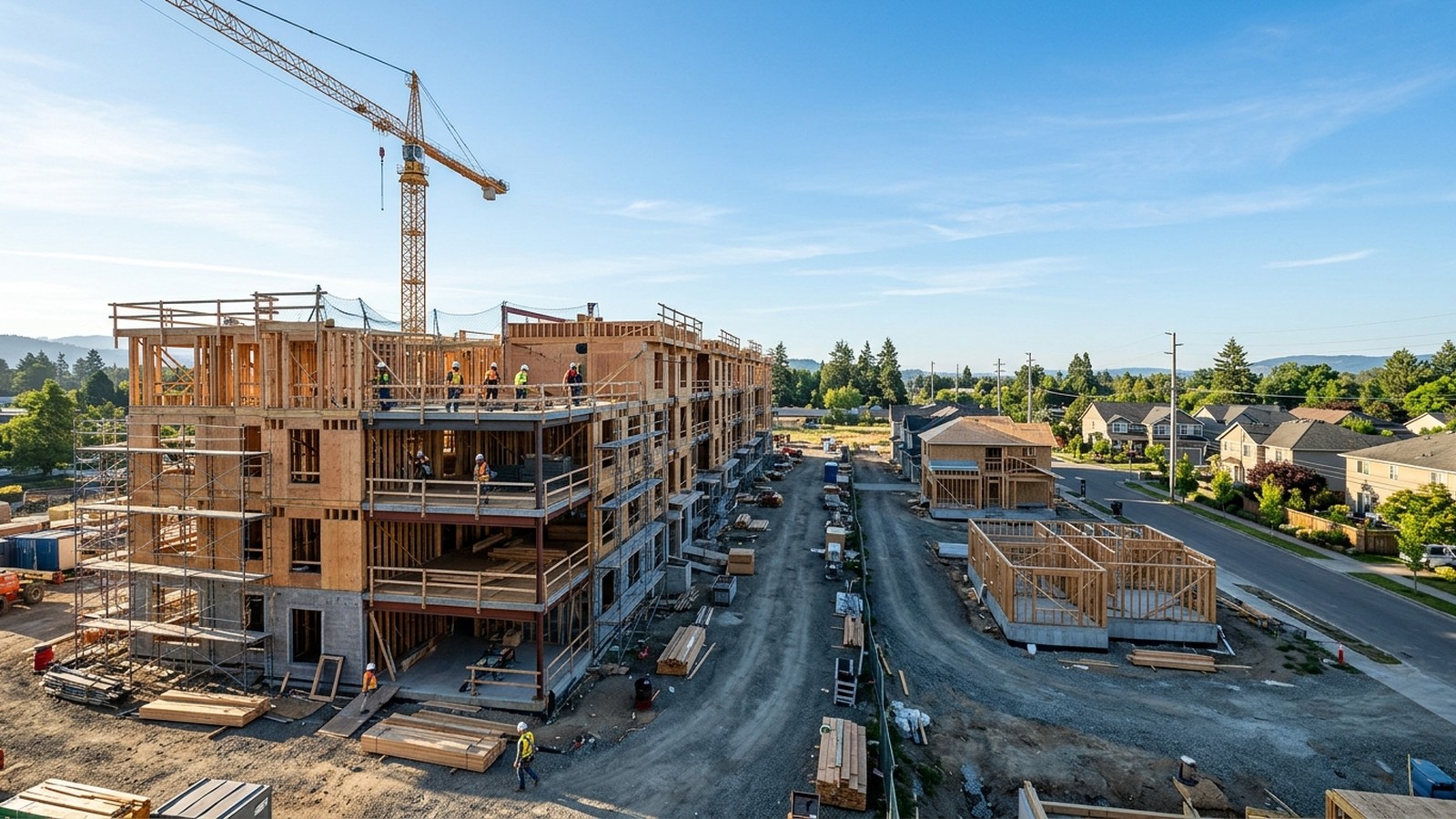
At first glance, the federal government’s latest residential construction release looks surprisingly upbeat—until you read past the top-line start number and look at what builders are actually planning for 2027. According to joint October 2026 figures from the U.S. Census Bureau and HUD, overall U.S. housing starts rebounded 9.9% month-over-month to a seasonally adjusted annual rate of 1.309 million units, snapping three consecutive monthly declines.
Yet the forward-looking half of the same report tells a starkly cautious story. Total building permits—the clearest gauge of shovels hitting dirt three to six months from now—plunged 7.4% to an annual pace of 1.295 million units, the weakest reading since May 2020. And the timing could scarcely be tougher for buyers: on November 19, Freddie Mac reported that the average 30-year fixed mortgage rate jumped to 7.28%.
Multifamily Volatility Masks Single-Family Pullback
To understand why starts jumped nearly 10% while permits fell to a six-year trough, economists point directly to apartment and condo financing. Large multifamily developments tend to break ground in lumpy waves whenever a handful of regional projects close construction loans, producing sharp month-to-month swings that obscure slower single-family trends.
As the National Association of Home Builders noted in its Eye on Housing analysis, single-family starts posted only a modest 4.0% monthly bounce to an annualized 864,000 units—hovering uncomfortably close to multi-year lows. More worryingly, single-family building permits tumbled 8.7% to 772,000, their weakest pace in nearly four years as developers tap the brakes on speculative suburban subdivisions.
Freddie Mac’s 7.28% Rate Snaps a Four-Week Slide
If builders needed another reason to pause new permit filings, Thursday’s borrowing news delivered it. According to Freddie Mac’s Primary Mortgage Market Survey released November 19, the benchmark 30-year fixed-rate mortgage climbed to 7.28%, up from 7.11% a week earlier and a full percentage point above the 6.26% average recorded a year ago. The 15-year fixed rate moved higher as well, rising from 6.45% to 6.66%.
As The Washington Post reported, the jump snaps a brief four-week drift lower and reflects stubborn bond-market anxiety. With the 10-year U.S. Treasury yield hovering near 5.05% following hotter-than-hoped inflation readings, bond traders are increasingly pricing in the risk of a Federal Reserve rate hike at December’s policy meeting—squeezing both mortgage shoppers and homebuilders simultaneously.
Even a seemingly modest 17-basis-point weekly uptick alters monthly affordability math immediately. On a $400,000 30-year mortgage, moving from 7.11% to 7.28% raises monthly principal and interest costs right as families weigh year-end tax and moving expenses, pushing borderline applicants out of debt-to-income approval limits and forcing loan officers to re-quote pre-approval letters overnight.
Why Builders Are Offering Deep Incentives Instead of Starting New Homes
Put plunging permits alongside this month’s gloomy builder sentiment readings and a clear corporate strategy emerges across publicly traded and regional developers:
- Clearing finished spec inventory first: Rather than breaking ground on fresh single-family lots at high construction-loan rates, builders are channeling cash into moving already-completed houses sitting on their books.
- Buying down buyer mortgages: Because paying for a 3-2-1 or permanent rate buydown lowers a buyer’s monthly payment far more efficiently than an equivalent sticker-price cut, large builders continue subsidizing financing down toward the 5% to 6% range to keep sales offices moving.
- Trimming costs amid labor and tariff pressures: Tight skilled-trade availability, elevated lumber and copper inputs, and tariff uncertainties mean developers cannot easily build cheap starter homes profitably—leaving fewer permits filed at the entry-level price tier.
What the Permit Slump Means for Renters and Buyers in 2027
For household budgets looking ahead to next year, the divergence between today’s construction pipelines and tomorrow’s supply creates two very different outlooks. In the near term, buyers shopping finished new-build communities often hold real negotiating leverage through December—particularly on spec homes builders want off balance sheets before year-end. Builders are far more willing to throw in free appliance upgrades, closing-cost assistance, or temporary interest-rate subsidies on standing inventory than they were twelve months ago, especially in outer-ring suburbs where completed houses outnumber qualified walk-in traffic.
Meanwhile, renters in fast-growing Sunbelt and Mountain metro corridors are quietly benefiting from the earlier multifamily construction wave finally delivering units onto leasing portals. Concessions such as six weeks of free rent or waived amenity fees remain common across newly opened apartment complexes, giving cost-conscious households breathing room to save for down payments while waiting out 7.28% mortgage rates.
Over the medium term, however, single-family permits sliding down to 772,000 annualized units guarantees that America’s underlying housing shortage is not going away when borrowing costs eventually cool. Fewer permits pulled in late 2026 simply translate into tighter finished inventory arriving in late 2027—setting the stage for renewed supply competition the moment mortgage rates finally find a lower gear and sidelined buyers rush back into the market together.
Sources & Further Reading
- U.S. Census Bureau & HUD — October 2026 New Residential Construction Report
- NAHB Eye on Housing — Single-Family Starts vs. Plunging Permits
- Freddie Mac / Morningstar — 30-Year Mortgage Rates Average 7.28% (Nov. 19, 2026)
- The Washington Post — Rising Bond Yields Push Mortgage Rates Higher Ahead of Fed Meeting