Direct answer: Solar window film keeps a room cooler than blackout curtains because it rejects heat at the glass before it enters the room. Blackout curtains block light and reduce glare, but sunlight still passes through the window pane and traps heat between the glass and the fabric.
Side-by-Side Comparison: Heat, Light, and Cost
| Factor | Solar Window Film | Blackout Curtains |
|---|---|---|
| Where heat is stopped | At the exterior/interior glass surface | Inside the room, after passing through glass |
| Natural daylight | Preserved (depending on tint level) | Blocked completely when closed |
| Typical cost per window | $25–$80 DIY / $120+ pro | $30–$90 per panel pair |
| Best for | Home offices & living rooms needing daylight | Bedrooms needing total darkness |
Why Solar Window Film Wins on Afternoon Heat
Solar-control film uses a thin metallic or ceramic layer to reflect infrared radiation back outside. Because the heat never builds up behind the glass, your air conditioner cycles less often during peak afternoon sun. For a broader look at payback across home upgrades, see our comparison of weatherstripping, window film, and insulation.
When Blackout Curtains Still Make Sense
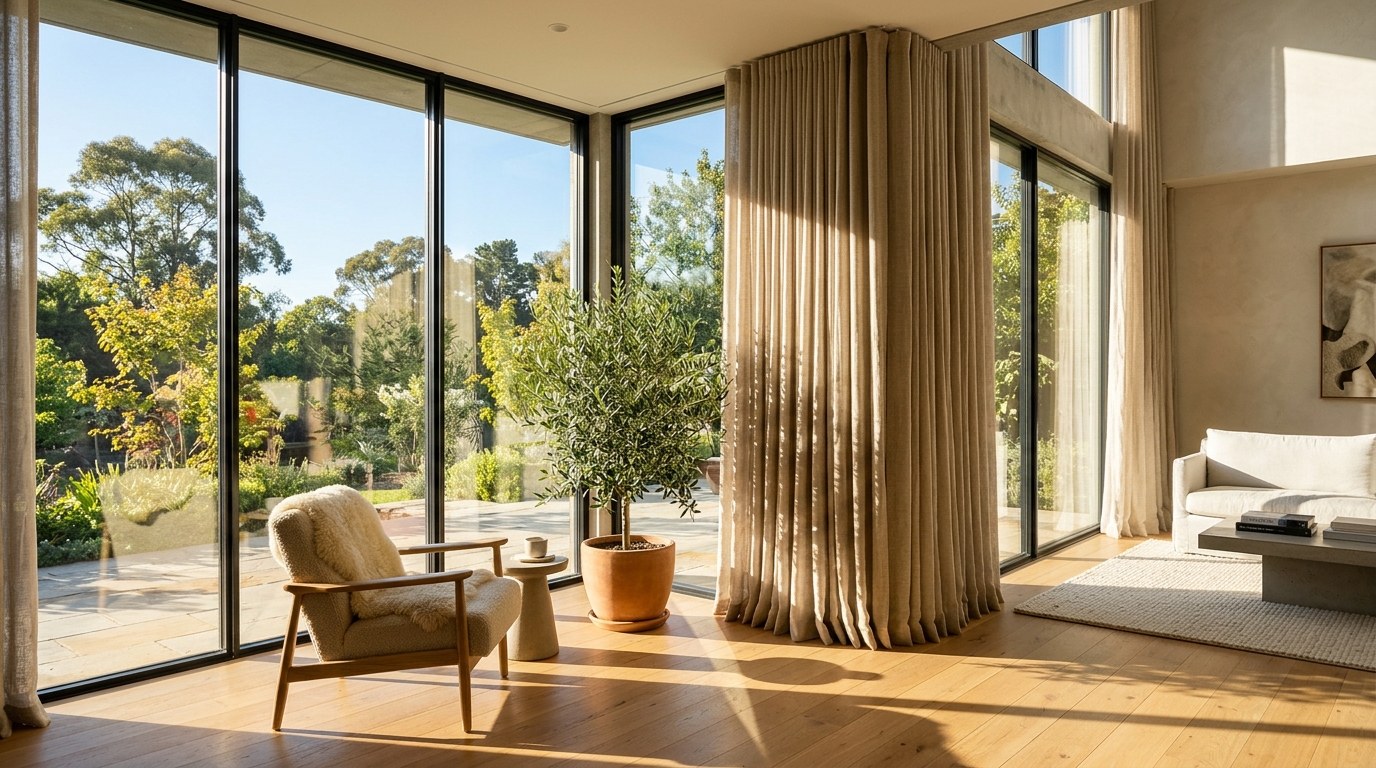
If your primary goal is sleeping during the day, reducing street noise, or blocking early-morning light in a bedroom, heavy thermal-lined blackout curtains are the better choice. You can also combine both: clear ceramic film on the glass to stop heat, plus curtains for nighttime privacy.
Frequently Asked Questions
Does window film make a room too dark?
No—modern ceramic window films reject up to 50%–70% of solar heat while keeping 50%–70% of visible daylight, so rooms stay bright without harsh glare.
Can you put blackout curtains over solar window film?
Yes. Pairing light-filtering solar film with curtains gives you daytime heat rejection and nighttime darkness, though you should check that your window glass type is rated for interior film.
Should I seal window drafts before applying film?
Yes—film stops radiant heat through glass, not warm air leaking around frames. Start with our guide on finding the air leaks that matter first.