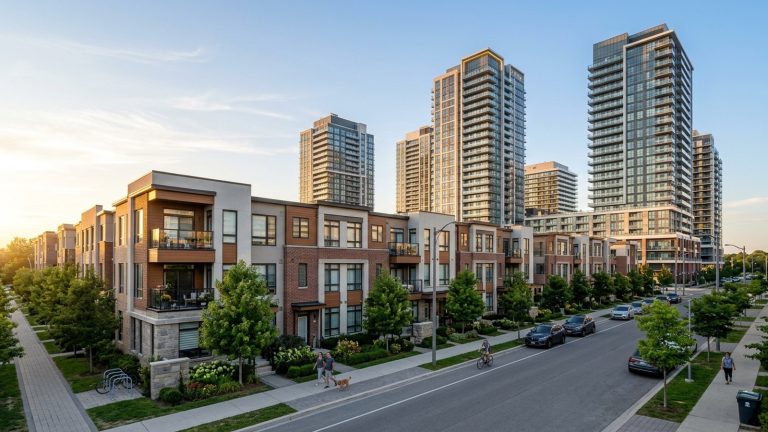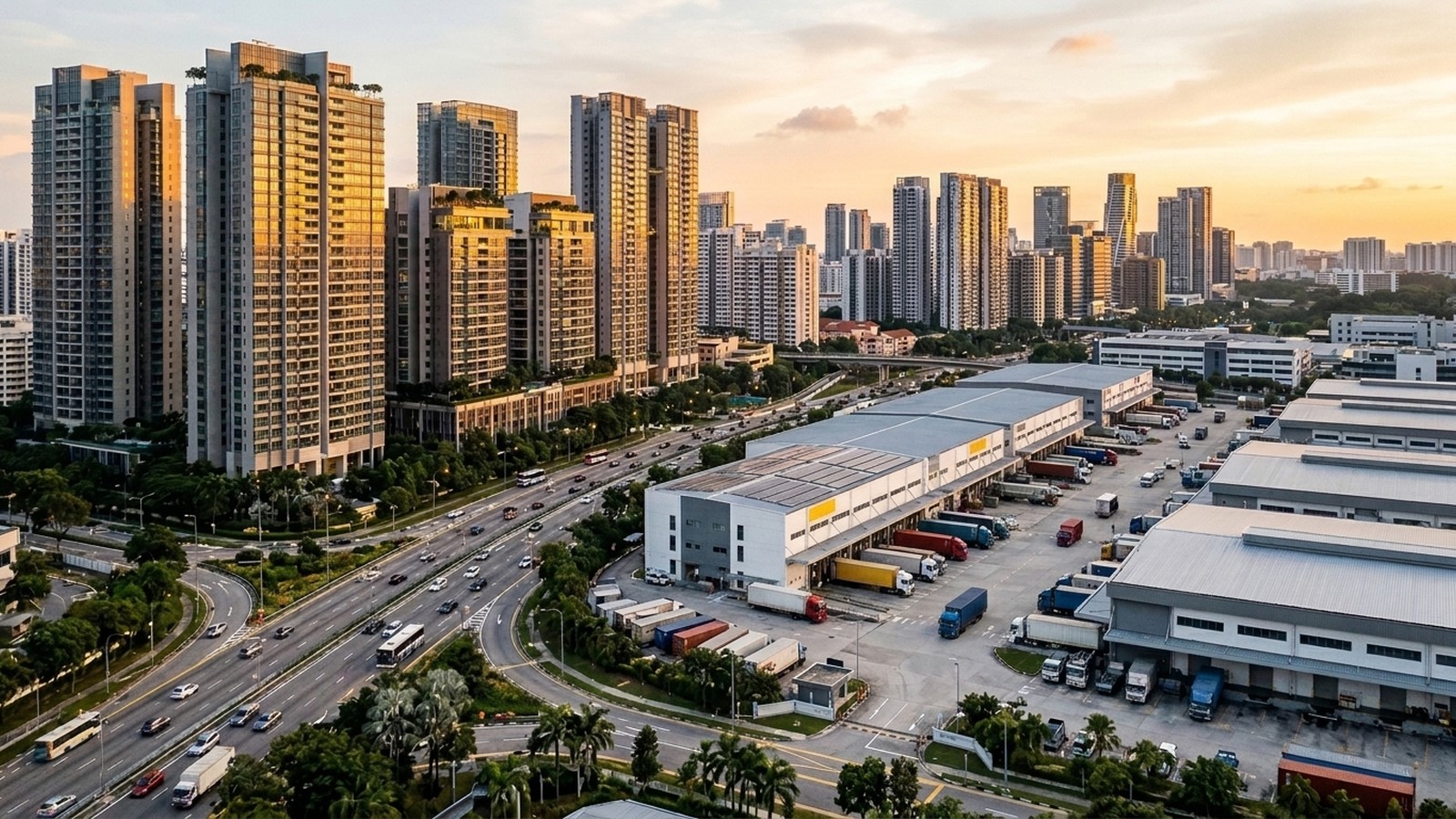
Walk past newly completed residential towers across Metro Manila this autumn and you will notice a widening gulf between glossy pre-selling billboards and actual occupancy. While the global real estate market is quietly staging a broad capital recovery toward roughly $1.2 trillion in annual investment, local property dynamics are fracturing sharply by asset class—punishing overbuilt speculative urban condos while rewarding industrial logistics corridors and resilient regional hubs.
Nowhere is that split clearer than in two fresh research briefings shaping developer strategy late in 2026: Colliers Philippines’ warning over Metro Manila’s condominium “turnover shock,” and Savills’ global analysis tracking how corporate nearshoring is redrawing industrial property demand worldwide.
Inside Metro Manila’s 9,000-Unit Condo Back-Out Wave
According to Colliers Philippines’ Q3 2026 market briefing, Metro Manila’s residential condominium sector recorded nearly 9,000 buyer cancellations across the first nine months of the year—an eye-opening figure sitting atop roughly 80,000 unsold units across the capital region, including tens of thousands of ready-for-occupancy (RFO) apartments waiting for takers.
More than half of those cancellations occurred at the exact moment buyers were supposed to take possession: unit turnover. Behind that wave lies a structural financing mismatch that built up quietly during years of stretch-term pre-selling:
- Promotional entry payments: During construction, developers marketed ultra-low monthly equity installments—often around ₱10,000 per month—making urban condo ownership look effortless for young professionals and overseas earners.
- The bank-amortization cliff: Once towers topped out and remaining balances shifted to commercial bank mortgages under tighter 2026 lending scrutiny, monthly amortizations frequently tripled or quadrupled to ₱30,000–₱40,000 or more.
- Inventory-clearing discounts: With pre-selling launches and net take-up falling to historic lows, major developers paused new Metro Manila tower announcements and rolled out aggressive 15-percent-plus RFO discounts and extended payment terms to move finished stock.
Local brokerage groups such as the Association of Real Estate Brokers of the Philippines (ABREP) note that forfeited units do not vanish from the market permanently and can be resold, yet the episode has forced overdue honesty around buyer qualification. Meanwhile, capital and end-user demand inside the Philippines have pivoted steadily toward provincial growth corridors like Cebu, Davao, and Pampanga/Clark, where infrastructure links and lower land costs support healthier absorption.
Meanwhile, Global Capital Chases Nearshoring Real Estate
Zoom out from urban residential towers to global institutional property, and an entirely different story emerges. Savills projects total worldwide real estate investment approaching $1.2 trillion as liquidity thaws—with industrial, cold-storage, and logistics assets decisively outperforming traditional office and speculative residential sectors.
The primary catalyst is supply-chain nearshoring. Buffeted by geopolitical fragmentation, tariff uncertainty, and maritime shipping choke points, multinational manufacturers and distributors are relocating production and regional warehousing closer to core consumer markets rather than chasing the lowest possible factory wage half an ocean away. Resilience now sits alongside unit labor cost on every boardroom site-selection scorecard.
In Savills’ 2026 Nearshoring Index—which weighs economic risk, infrastructure quality, cost efficiency, and environmental standards—resilient hubs including Canada, Japan, Taiwan, and the United Kingdom stand out globally, alongside European leaders like Austria and the Czech Republic, which leverage central rail and highway links alongside modern logistics parks. Crucially, corporate tenants are no longer shopping solely for cheap warehouse square footage; they demand reliable grid power, clean-energy access, automation-ready floor slabs, and ESG-compliant industrial footprints.
What Buyers and Developers Should Do Next
For ordinary condo shoppers in Southeast Asia, Metro Manila’s oversupply offers genuine buyer leverage for the first time in years—provided shoppers resist low-down-payment marketing illusions. Running a conservative bank-amortization stress test before paying a reservation fee, comparing ready-for-occupancy developer discounts against secondary-market resale prices in the exact same building, and verifying real monthly association dues and special assessments can prevent costly mid-turnover walkaways.
Developers, meanwhile, face a slower and more disciplined build cycle. Rather than launching forty-story studio towers geared toward short-term investor flips, regional builders increasingly have to match unit layouts, acoustic insulation, and transit access to actual families and end-users planning to live there for a decade. Where financing gaps persist, transparent pre-qualification checks before contract signing protect both household savings and developer balance sheets.
One Lesson Across Both Markets: Cash-Flow Realism Wins
At first glance, a young professional walking away from a Metro Manila studio deposit and a European manufacturer leasing a logistics hub outside Prague share little in common. Yet both trends point to the exact same 2026 market correction: speculative storytelling no longer carries real estate valuations.
In Manila, buyers burned by pre-selling math are demanding finished RFO transparency, genuine rental-yield math, and bank-tested monthly budgets before signing reservation checks. Globally, institutional investors are bypassing half-empty glass office towers and chasing physical buildings wired directly into real-economy supply chains. Whether you are buying a first home or allocating industrial capital, 2026 rewards boring arithmetic—proven affordability on day one, real transport infrastructure outside the door, and demand that holds up long after promotional discounts expire.