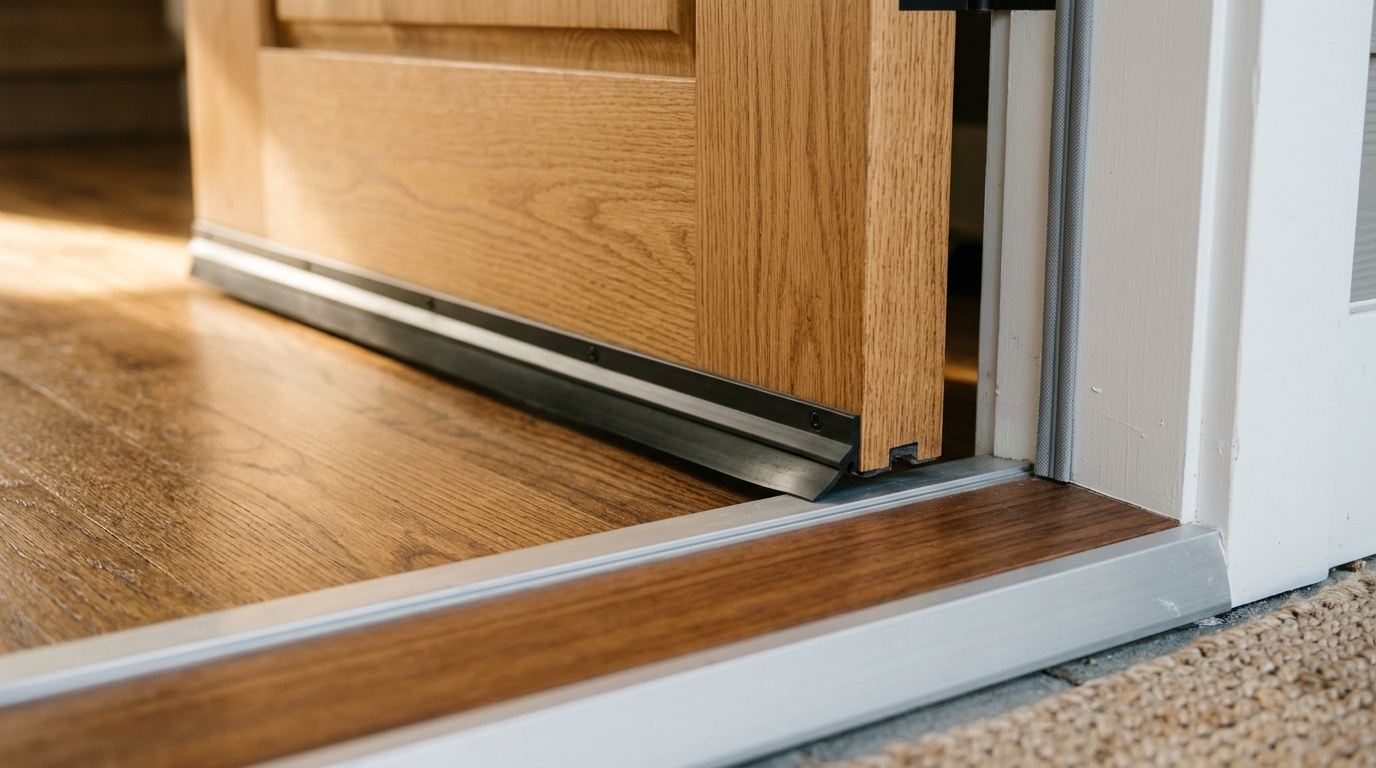
Direct answer: You can seal most front door gaps in under 30 minutes for $15–$40 using two parts: a screw-on or slide-on door sweep for the bottom threshold gap, and self-adhesive silicone or V-strip weatherstripping along the sides and top jamb.
Match the Gap to the Right Seal
| Gap Location | Best Fix | Typical Cost | Lifespan |
|---|---|---|---|
| Bottom of door (daylight visible) | Aluminum & rubber door sweep or threshold seal | $12–$25 | 3–5+ years |
| Sides & top frame (even gap) | Silicone D-profile or E-profile tape | $8–$15 | 2–4 years |
| Uneven or tight hinge-side gap | Flexible V-strip (tension seal) | $10–$18 | 5+ years |
Step 1: Check Where Air Is Actually Leaking
Close the door on a bright day and look for thin lines of daylight around the perimeter, or run the back of your hand slowly along the frame on a breezy evening. If you want to audit the rest of your home at the same time, follow our walkthrough on finding the air leaks that matter.
Step 2: Clean, Measure, and Install
Wipe the door jamb with rubbing alcohol and let it dry completely—adhesive weatherstripping fails within weeks if applied over dust or grease. Measure each side separately, cut slightly long, and press firmly along the door stop so the door compresses the seal gently without needing to slam shut.
Frequently Asked Questions
Why does my foam weatherstripping peel off after a few months?
Cheap open-cell foam absorbs moisture and loses elasticity quickly, especially on humid or sun-exposed doors. Silicone rubber seals or screw-mounted sweeps last much longer.
How tight should a sealed door feel?
It should latch cleanly with normal hand pressure. If you have to push hard to lock the deadbolt, the weatherstripping profile is too thick for that gap.
Is weatherstripping worth it compared to window film or insulation?
Yes—it is the fastest-payback upgrade you can do. See our full breakdown of which home upgrade pays back fastest.